
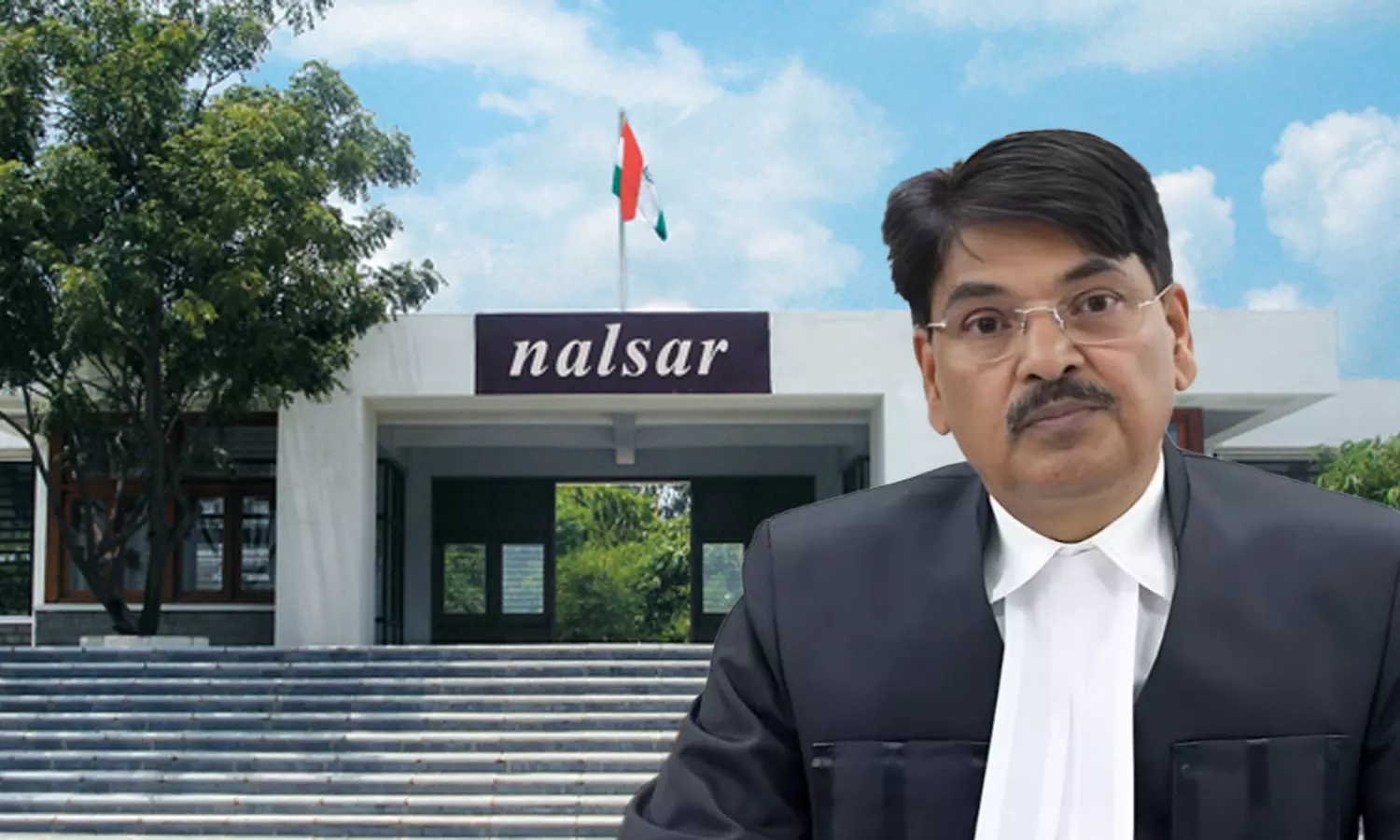
Source Live law
A major controversy has erupted in India’s legal education and professional landscape after the Bar Council of India (BCI) announced that it will not enroll any graduates from the 2026 batch of NALSAR University of Law as advocates. The decision, declared by the BCI Chairman, comes in the wake of a student-led campaign reportedly targeting Surya Kant, triggering widespread debate over institutional discipline, freedom of expression, and the limits of student activism.
The BCI’s directive has sent shockwaves through the legal fraternity, as enrollment with the Council is a mandatory requirement for law graduates to practice as advocates in India. By withholding enrollment, the regulatory body has effectively stalled the professional entry of an entire graduating class, raising serious concerns about the future of affected students.
According to the BCI Chairman, the decision was taken in response to what he described as “unacceptable and disrespectful conduct” by certain students. The campaign, allegedly involving critical messaging against the Chief Justice, was viewed by the Council as crossing ethical and professional boundaries expected from future members of the legal profession. The Chairman emphasized that respect for constitutional authorities and judicial institutions is fundamental to the practice of law.
“The legal profession is not merely about academic excellence but also about upholding the dignity of institutions,” the Chairman stated, adding that such actions could undermine public trust in the judiciary.
However, the move has drawn sharp criticism from various quarters, including legal experts, academics, and civil rights advocates. Critics argue that penalizing an entire batch for the actions of some individuals is disproportionate and raises questions about collective punishment. Many have also pointed out that universities are spaces for debate and dissent, and students should not be subjected to severe professional consequences for expressing opinions, even if controversial.
Several alumni of NALSAR and other National Law Universities (NLUs) have voiced their concern, calling the decision “deeply troubling” and “unprecedented.” They argue that while disciplinary measures may be warranted in certain cases, denying enrollment altogether could permanently damage the careers of students who may not have been directly involved in the campaign.
Student representatives from NALSAR have also responded, stating that the situation has been “mischaracterized” and that not all students were part of the alleged campaign. They have urged the BCI to reconsider its decision and engage in dialogue with the university administration and student body to find a fair resolution.
Legal analysts suggest that the issue could escalate into a broader constitutional debate, particularly concerning the balance between regulatory authority and individual rights. Questions are being raised about whether the BCI’s action could be challenged in court, especially on grounds of natural justice and proportionality.
Meanwhile, the administration of NALSAR has reportedly begun consultations with legal experts and stakeholders to address the crisis. The university is expected to formally communicate with the BCI, seeking clarity and possibly requesting a review of the decision.
The controversy also highlights a growing tension between institutional authority and student activism in India’s higher education system. As students increasingly engage with socio-political issues, regulatory bodies are being forced to confront complex questions about discipline, accountability, and freedom of expression.
For now, the fate of the 2026 batch remains uncertain. With careers hanging in the balance, the coming weeks are likely to see intense legal and institutional developments. Whether the BCI stands firm on its decision or opts for a more conciliatory approach could have lasting implications for legal education and professional regulation in India.









