
Source The Hindu
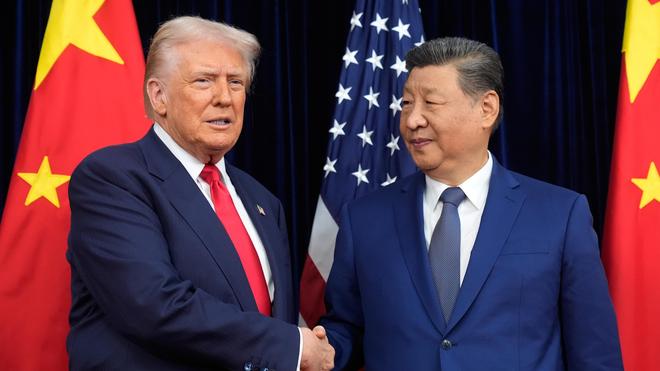
BEIJING – President Donald Trump is set to arrive in the Chinese capital this Wednesday for a high-stakes three-day summit with President Xi Jinping, marking the first visit by a U.S. leader to China since Trump’s own “state visit-plus” in 2017.
The air in Beijing is thick with both pageantry and pragmatism. While the Trump administration seeks a blockbuster “grand deal” to stabilize a global economy rocked by recent conflicts in the Middle East, Chinese leadership is approaching the table with a new, hardened confidence—viewing the current American political and economic landscape as a confirmation of a “fading superpower.”
A Quest for the “Greatest Deal”
Returning to the world stage following a period of domestic and international turbulence, President Trump is reportedly eyeing a sweeping series of agreements. Sources close to the White House suggest the “Beijing Accord” could include:
Aviation & Energy: A multi-billion dollar commitment for Boeing 737 Max jets and long-term contracts for American liquid natural gas (LNG).
The Rare Earth Truce: A formalization of the temporary “mineral bridge” established in South Korea last year, ensuring a steady flow of Chinese rare earths to U.S. tech manufacturers.
The “Board of Trade”: The establishment of a permanent bilateral body to manage investment disputes and bypass traditional bureaucratic hurdles.
For Trump, the mission is clear: translate personal rapport with Xi into tangible economic wins that resonate with his base ahead of the 2026 midterm elections.
The View from the Dragon: Assessing “American Decay”
Beneath the diplomatic pleasantries, however, lies a significant shift in Beijing’s strategic calculus. Prominent Chinese scholars and state media have increasingly characterized the United States as a nation in “irreversible decline,” pointing to soaring federal debt, political polarization, and the strategic overreach caused by the recent Iran conflict.
“The East is rising, and the West is declining,” has moved from a propaganda slogan to a foundational policy belief in Beijing.
Chinese officials believe they now hold the “upper hand” in negotiations. While they are willing to offer “symbolic wins”—like agricultural purchases—to prevent a total economic decoupling, they are expected to press for major concessions on Taiwan and a roll-back of U.S. high-tech export controls.
High Stakes and Shadow Issues
While trade dominates the headlines, several “thornier” issues loom in the background:
Taiwan: Beijing has signaled that any deal must include a shift in U.S. language regarding the island’s status.
The Iran War: With the U.S. Navy blockading the Strait of Hormuz, China—Iran’s largest oil buyer—is expected to demand an end to the “energy strangulation” that is inflating prices globally.
Artificial Intelligence: In a surprising twist, Trump has reportedly invited tech giants like Nvidia’s Jensen Huang to join the delegation, signaling a desire to open a “safety channel” for AI development despite ongoing tech sanctions.
As the two leaders prepare for their face-to-face talks on Thursday and Friday, the world watches to see if this summit will produce a new era of “Great Power Cooperation” or merely a temporary truce between two rivals who increasingly believe the other is on the way down.









