Source The Hindu
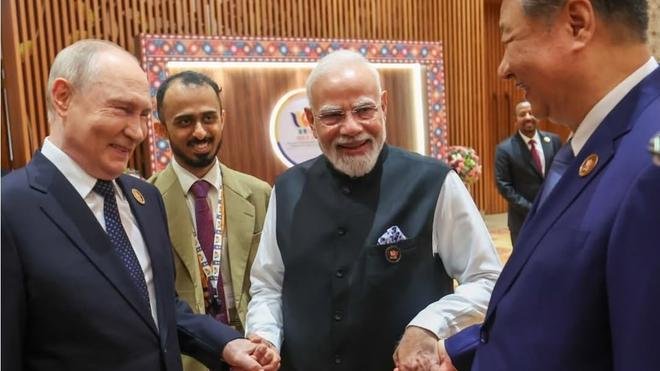
In a significant diplomatic development, Prime Minister Narendra Modi and Chinese President Xi Jinping held crucial bilateral talks on the sidelines of the BRICS Summit 2026, marking a renewed effort to stabilise relations between the two Asian giants. The high-level meeting, currently underway, is being closely watched by global observers amid ongoing geopolitical tensions and shifting economic alliances.
The meeting comes at a time when both nations are seeking to recalibrate ties following years of strained relations, particularly after the border standoff in eastern Ladakh. While no official statement has been released yet, early indications suggest that the discussions are focused on maintaining peace along the Line of Actual Control (LAC), improving communication mechanisms, and exploring avenues for economic cooperation.
Sources familiar with the developments indicate that trade and economic engagement are also key points on the agenda. Despite political tensions, China remains one of India’s largest trading partners. Both sides are expected to deliberate on reducing trade imbalances and facilitating smoother market access for businesses. There is also speculation that the leaders may discuss cooperation in emerging sectors such as renewable energy, technology, and supply chain resilience.
The ongoing summit, hosted by India, has brought together leaders from Brazil, Russia, India, China, and South Africa, along with newly inducted members of the expanded BRICS bloc. The forum has increasingly positioned itself as a counterbalance to Western-led global institutions, with a focus on multipolarity, economic cooperation, and development financing.
Prime Minister Modi, in his opening remarks earlier at the summit, emphasised the importance of dialogue and diplomacy in resolving conflicts. Without naming any country, he highlighted that global stability depends on mutual respect, sovereignty, and adherence to international norms. President Xi, on his part, reiterated China’s commitment to strengthening BRICS cooperation and promoting inclusive global growth.
The Modi-Xi bilateral is particularly significant given the limited direct engagement between the two leaders in recent years. Previous encounters have largely been confined to multilateral settings, with cautious diplomatic messaging. Analysts believe that this meeting could signal a tentative thaw in relations, though substantial breakthroughs are unlikely in the short term.
Security concerns remain a critical aspect of the dialogue. India has consistently stressed the need for complete disengagement and de-escalation in border areas, while also pushing for restoration of trust through established military and diplomatic channels. Any progress on this front would be seen as a major step toward normalising ties.
Meanwhile, the broader BRICS discussions are expected to address global economic challenges, including inflation, energy security, and the need for reform in international financial institutions. The bloc is also exploring alternatives to dollar-dominated trade systems, a move that has gained traction among member nations.
As the bilateral talks continue, officials from both sides are expected to release detailed briefings later in the day. The outcome of this meeting could have far-reaching implications not only for India-China relations but also for regional stability and global geopolitics.
The world now watches closely as two of the largest economies attempt to navigate differences and find common ground in an increasingly complex international landscape.