Source News 18
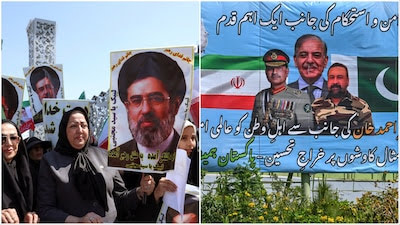
ISLAMABAD / TEHRAN – The fragile facade of Pakistan’s role as a neutral peacemaker between Washington and Tehran has begun to crumble. In an unprecedented public rebuke, Iranian state media and high-ranking analysts have accused Islamabad of playing a “double game,” alleging that Pakistan has abandoned its role as an impartial mediator to act as a proxy for American interests.
The accusations center on General Asim Munir, Pakistan’s Army Chief, who has been leading high-stakes backchannel diplomacy. Iranian officials claim that while Pakistan presented itself as a bridge-builder, it has been systematically tilting the scales in favor of the United States as a crucial April 22 ceasefire deadline looms.
The 10-Point Proposal Discrepancy
At the heart of the fallout is a “10-point negotiation framework” drafted by Tehran. According to Iranian state television, General Munir personally collected this framework during a visit to Iran with the promise of delivering it to Washington as a viable basis for peace.
However, Tehran now alleges that Islamabad:
Shelved the Iranian proposal without securing a formal response from the U.S.
Substituted it with 15–16 new demands that mirror the “maximalist” positions of the Trump administration.
Applied diplomatic pressure on Iranian leadership to accept these new terms under the guise of “regional stability.”
“Pakistan is no longer relaying messages; they are editing them,” stated a prominent Iranian state media analyst. “Islamabad has revealed its true loyalties lie with Washington’s agenda, likely in exchange for economic concessions.”
A Stalled Peace Process
The diplomatic rift comes at a critical juncture. U.S. President Donald Trump recently signaled that a high-level delegation, potentially led by Vice President J.D. Vance, was prepared to travel to Islamabad for a second round of talks.
However, the “Islamabad Framework” is now in jeopardy. Iran initially rejected participation in this second round, citing a “negative atmosphere” and accusing the U.S. of maintaining a naval blockade on the Strait of Hormuz despite ongoing talks. While reports suggest Iran’s Supreme Leader may have given a last-minute nod for continued engagement, the level of trust in Pakistan’s mediation has reached an all-time low.
Pakistan’s Balancing Act Collapses
For decades, Pakistan has attempted a precarious balancing act between its neighbor, Iran, and its traditional security partner, the United States. In early 2026, as U.S.-Iran tensions escalated into direct military strikes, Islamabad positioned itself as the only capital capable of talking to both sides.
Critics now argue that Pakistan’s desperation to shore up its own struggling economy has made it susceptible to U.S. influence. Iranian analysts point to Pakistan’s deep defense ties with Saudi Arabia—a chief regional rival of Iran—as further evidence that Islamabad was never a truly neutral party.
The Road Ahead
As the ceasefire expiration nears, the “double game” allegations leave the peace process without a reliable referee. If Tehran continues to bypass Pakistani channels, the risk of a return to open hostilities in the Persian Gulf increases significantly.
For now, Islamabad maintains that it remains committed to “calibrated neutrality,” but in the eyes of Tehran, the “Pro-US Tilt” has already redefined the relationship.