Source Aljajeera
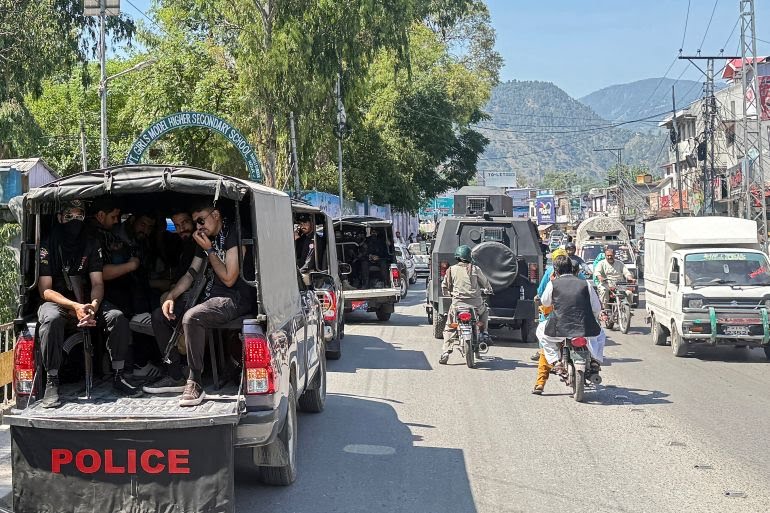
MUZAFFARABAD — A tense calm hung over Pakistan-administered Jammu and Kashmir (AJK) on Tuesday as empty streets, shuttered businesses, and a total internet blackout paralyzed major cities following a weekend of deadly clashes between security forces and protesters.
The unrest, which has claimed the lives of both civilians and law enforcement officials, marks a sharp and dangerous escalation in a long-standing standoff between the regional government and a grassroots civil society alliance.
Red Lines and Deadly Clashes
The immediate flashpoint erupted in the mountainous city of Rawalakot, in AJK’s Poonch district. Clashes broke out over the weekend, leaving several people dead—officials confirmed that four law enforcement personnel and at least three protesters were killed, while dozens more were injured.
The local government has accused members of the Joint Awami Action Committee (JAAC)—a prominent grassroots protest group—of launching a planned attack on security forces and laying siege to a military-run hospital. Conversely, JAAC leadership strongly denied the allegations, stating that security forces opened fire on a peaceful sit-in.
In response to the violence, the regional government officially outlawed the JAAC under anti-terror laws, describing it as a threat to public order, and deployed federal paramilitary troops across the territory. A strict travel advisory has been issued, instructing “outsiders” to avoid traveling to the region, while mobile network signals have been cut off to prevent further mobilization.
The Core Issue: The Fight Over Reserved Seats
While the JAAC originally gained widespread popularity over the last few years by leading massive protests against skyrocketing electricity bills, inflation, and wheat shortages, the current crisis revolves around a core political grievance: the regional legislature’s reserved seats.
Ahead of the highly anticipated regional elections scheduled for July 27, the JAAC is demanding the total abolition of 12 legislative seats reserved for Kashmiri refugees who fled Indian-administered Kashmir after 1947 and now live in mainland Pakistan.
The dynamics of the dispute center on a few key points:
The Protesters’ Argument: The JAAC and its supporters argue that these 12 refugee seats give major, mainstream political parties in mainland Islamabad unfair leverage to meddle in local elections and dictate who forms the government in Muzaffarabad.
The Government’s Position: The regional government maintains that changing the structure of the assembly requires a formal legislative amendment. The campaign suffered a major institutional setback on Sunday when the AJK Supreme Court ruled that these 12 seats enjoy constitutional protection and cannot simply be dismantled by executive order.
A Growing Human Rights Crisis
The heavy-handed government response has triggered sharp international scrutiny. The Human Rights Commission of Pakistan (HRCP) and Amnesty International have both condemned the designation of the JAAC as a terrorist organization, warning that arbitrary arrests and cutting off communications will only shrink democratic spaces and worsen local anger.
Regional Prime Minister Faisal Mumtaz Rathore has repeatedly appealed for a return to the negotiating table, stating that complex constitutional debates cannot be resolved through street violence. However, with internet networks dark and the military patrolling deserted markets, a peaceful resolution appears increasingly distant.