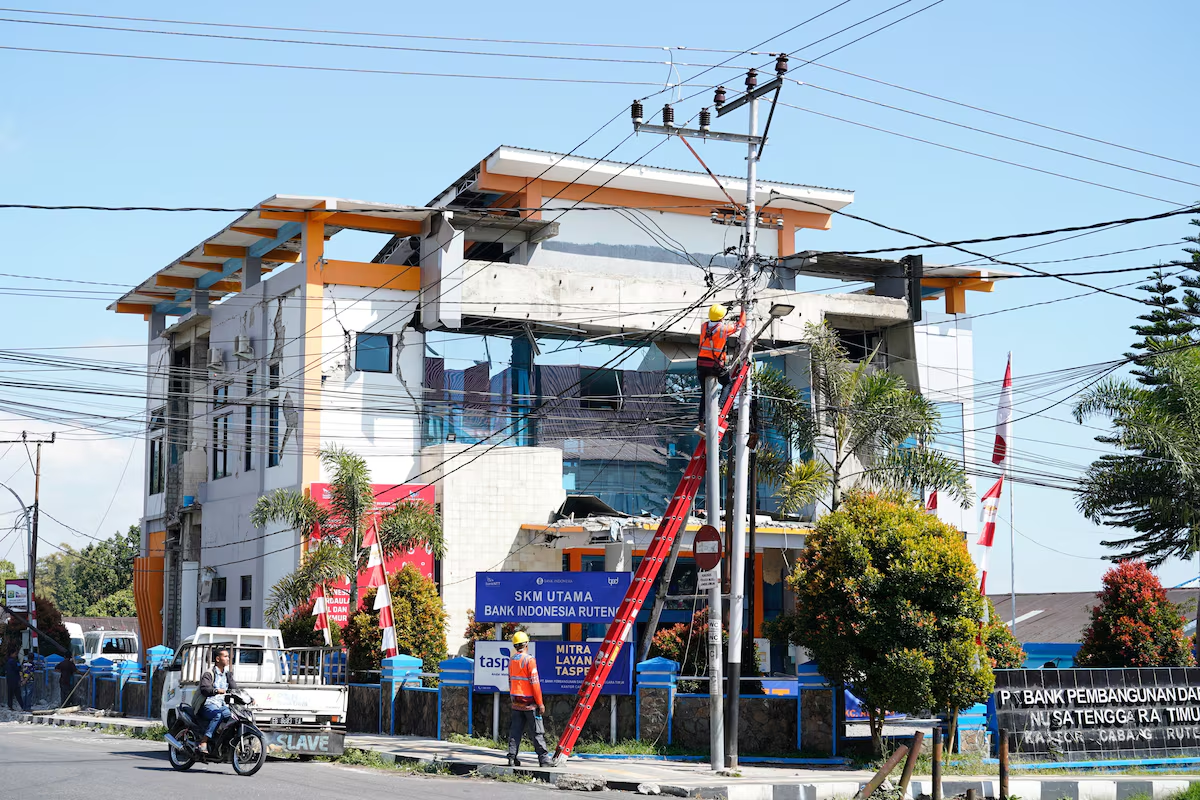
A powerful earthquake struck Indonesia, leaving at least 53 people dead and forcing thousands of residents to flee their homes, as rescue teams race against time to locate survivors amid challenging conditions caused by continuous aftershocks.
The earthquake, which hit a densely populated region, caused widespread destruction to buildings, roads, and essential infrastructure. Local authorities reported that dozens of homes collapsed, trapping residents under debris. Emergency responders, including national disaster agencies and local volunteers, have been working tirelessly to rescue those buried beneath the rubble.
Officials stated that the situation remains critical as aftershocks continue to shake the affected areas, complicating rescue operations and raising fears among survivors. Many residents have sought shelter in open spaces, temporary camps, and evacuation centers, reluctant to return to their homes due to the ongoing seismic activity.
“We are prioritizing search and rescue operations, but the aftershocks are making it extremely dangerous for our teams,” a disaster management official said. “Our focus is to save as many lives as possible.”
Hospitals in nearby regions have been overwhelmed with injured victims, many suffering from fractures, head injuries, and trauma. Medical teams are working around the clock, while emergency supplies, including food, water, and medical aid, are being rushed to the disaster-hit areas.
The Indonesian government has mobilized military personnel and disaster response units to assist in relief efforts. Heavy machinery has been deployed to clear debris, although access to some remote areas remains difficult due to damaged roads and landslides triggered by the quake.
Authorities have urged residents to remain cautious and follow safety advisories, warning that further aftershocks could occur in the coming days. Schools and public offices in the affected region have been temporarily closed, and officials are assessing the full extent of the damage.
Indonesia, located along the Pacific “Ring of Fire,” is highly prone to earthquakes and volcanic activity. The latest disaster once again highlights the country’s vulnerability to natural calamities and the urgent need for resilient infrastructure and disaster preparedness.
As rescue operations continue, families anxiously wait for news of missing loved ones, while humanitarian organizations step in to provide relief and support. The coming days will be crucial as authorities work to stabilize the situation and begin the long process of recovery and rebuilding.