
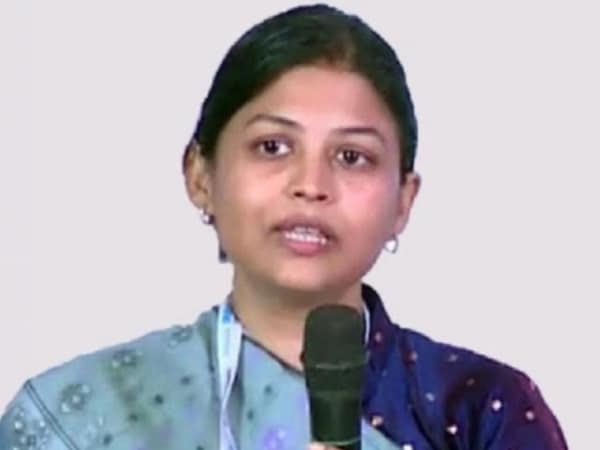
Source News18
NEW DELHI — In a rare and decisive administrative move that has sent shockwaves through India’s civil services, the Central Government has dismissed senior IAS officer Padma Jaiswal from service. Jaiswal, a 2003-batch officer of the AGMUT (Arunachal Pradesh-Goa-Mizoram-Union Territories) cadre, was serving as the Special Secretary in the Delhi government’s Department of Administrative Reforms at the time of her ouster.
The dismissal brings a dramatic end to a 23-year career, concluding a protracted legal and bureaucratic battle rooted in a financial misappropriation case dating back to 2007.
The final removal order was executed following official approval from the President of India, acting on the recommendations of the Department of Personnel and Training (DoPT) and the Ministry of Home Affairs (MHA).
The Genesis: 2007 Arunachal Pradesh Graft Case
The allegations against Jaiswal trace back to her tenure as the Deputy Commissioner of West Kameng district in Arunachal Pradesh between 2007 and 2008.
In February 2008, local residents filed a formal complaint accusing her of grossly misusing her official position and embezzling government revenue. The allegations triggered an immediate internal scrutiny of financial ledgers and administrative approvals under her watch.
Following the initial probe, Jaiswal was suspended in April 2008. Though her suspension was later revoked in October 2010, allowing her to return to active duty, the MHA pressed forward with formal disciplinary action under Rule 8 of the All-India Services (Discipline & Appeal) Rules. Charge sheets were served to her in 2009 and 2010, initiating a meticulous, decades-long inquiry.
A Complex Legal Tug-of-War
The road to Jaiswal’s dismissal was defined by intense institutional and judicial conflict:
The Jurisdictional Dispute: The Central Administrative Tribunal (CAT) initially quashed the MHA’s disciplinary proceedings, ruling that the Ministry lacked the proper jurisdiction over AGMUT cadre officers.
The High Court Intervention: The Union Government challenged the CAT ruling in the Delhi High Court. On April 1, 2026, the High Court overturned the tribunal’s order, ruling that CAT had “erred” in its judgment. The court restored the disciplinary procedures back to the stage at which they were stayed.
The Final Verdict: With the legal roadblocks cleared, the MHA finalized its inquiry. Backed by stringent recommendations from both the Central Vigilance Commission (CVC) and the Union Public Service Commission (UPSC), the major penalty of removal from service was proposed and approved.
Profile of the Ousted Officer
Before her unceremonious exit, Jaiswal boasted an impressive academic and professional portfolio. An alumnus of St. Xavier’s School and Panjab University’s University Business School, she held an MBA and was a certified Company Secretary (ICSI). She had also served as a UGC Research Fellow specializing in financial management and legal personnel management.
Over her two decades in the civil services, she held several high-profile administrative portfolios spanning Delhi, Goa, Puducherry, and Arunachal Pradesh.
When contacted regarding the dismissal order, Jaiswal maintained a brief stance, stating, “I am not aware of any such development or any dismissal order being passed.”
A Strong Message to the Bureaucracy
The invocation of a major penalty like dismissal—which strips an officer of future government employment opportunities and related service benefits—is an exceedingly rare occurrence for serving IAS officers in India.
Administrative experts note that while the case highlight glaring delays in India’s departmental inquiry systems, the final outcome sends an uncompromising message across the bureaucracy: public accountability and financial integrity remain paramount, no matter how many decades have passed.









