
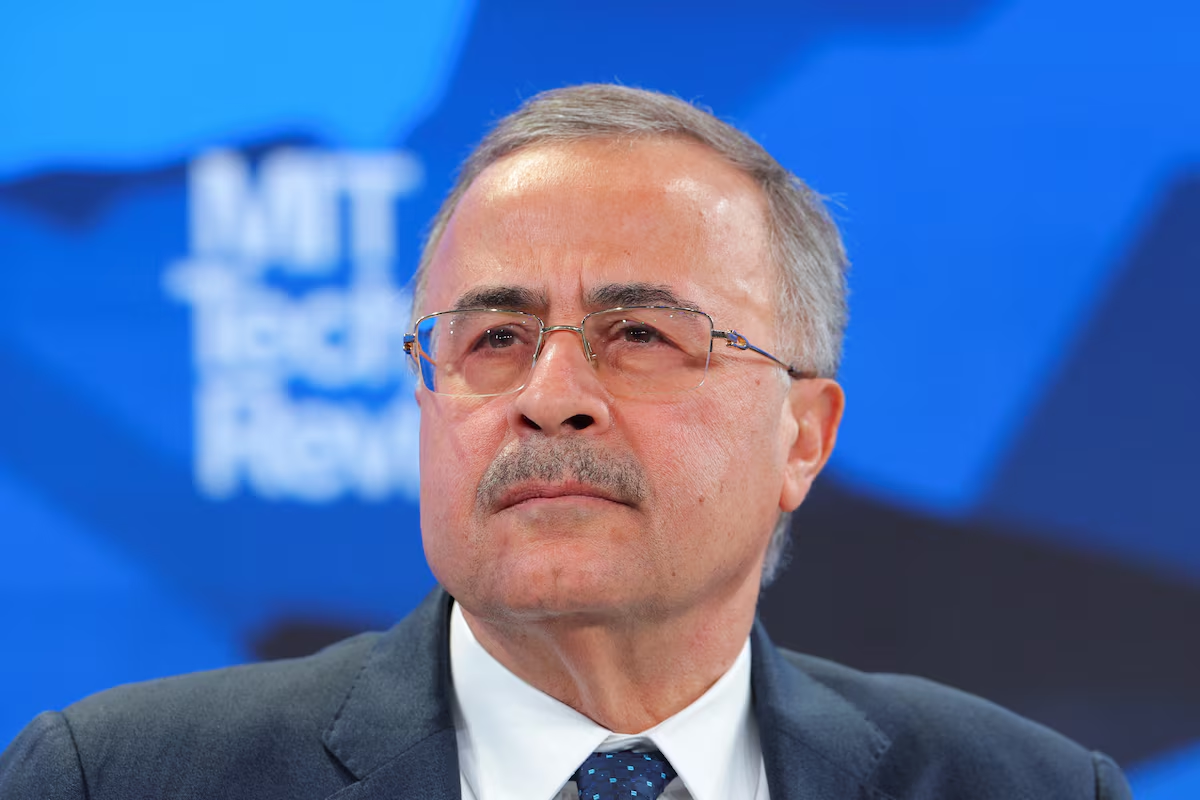
Source reuter
DHAHRAN, Saudi Arabia — The CEO of Saudi Aramco, Amin Nasser, has issued a stark warning regarding the future of global energy stability, noting that the loss of roughly 1 billion barrels of oil from global inventories will significantly hamper the market’s ability to recover from recent volatility.
Speaking at a major industry conference, Nasser highlighted that the rapid depletion of global oil stocks is not merely a statistical dip, but a precursor to a potential supply crisis. He argued that the “buffer” that once protected the global economy from price shocks has been effectively eroded.
The Warning: A Fragile Recovery
According to Nasser, the “massive” drawdowns seen over the last year have left the market with very little spare capacity. While demand for crude oil continues to climb toward pre-pandemic levels, the investment in new production has failed to keep pace.
“The 1 billion barrels lost from the market is a clear signal that we are running on thin ice,” Nasser stated. “Without a significant pivot toward increased investment in upstream production, the recovery will be slow, painful, and prone to extreme price swings.”
Key Factors Hindering Market Stability
The Aramco chief pointed to several interconnected issues currently weighing down the industry’s ability to bounce back:
Underinvestment: A multi-year trend of reduced capital expenditure in oil and gas projects.
Inventory Depletion: Global strategic and commercial reserves are at multi-year lows.
Demand Resilience: Despite the global push for a green energy transition, the demand for conventional fuels remains robust in developing economies.
The Economic Ripple Effect
Analysts suggest that if the “lost” billion barrels are not replenished or offset by new production soon, the cost of refined products—such as gasoline and jet fuel—will likely remain elevated. This poses a direct threat to global efforts to curb inflation.
Nasser’s comments underscore a growing tension between the immediate need for energy security and the long-term goals of decarbonization. He cautioned that a “disorderly” energy transition, which ignores the continued necessity of fossil fuels in the short term, would only exacerbate the current supply deficit.
Looking Ahead
The warning from the world’s largest oil exporter serves as a wake-up call for policy-makers and investors alike. As the global economy continues its uneven expansion, the “safety net” provided by high inventory levels has vanished, leaving the world’s energy markets increasingly vulnerable to geopolitical disruptions and technical failures.
For now, the message from Dhahran is clear: the road to recovery is much longer than many anticipated, and the missing billion barrels represent a significant roadblock.









