Source reuter
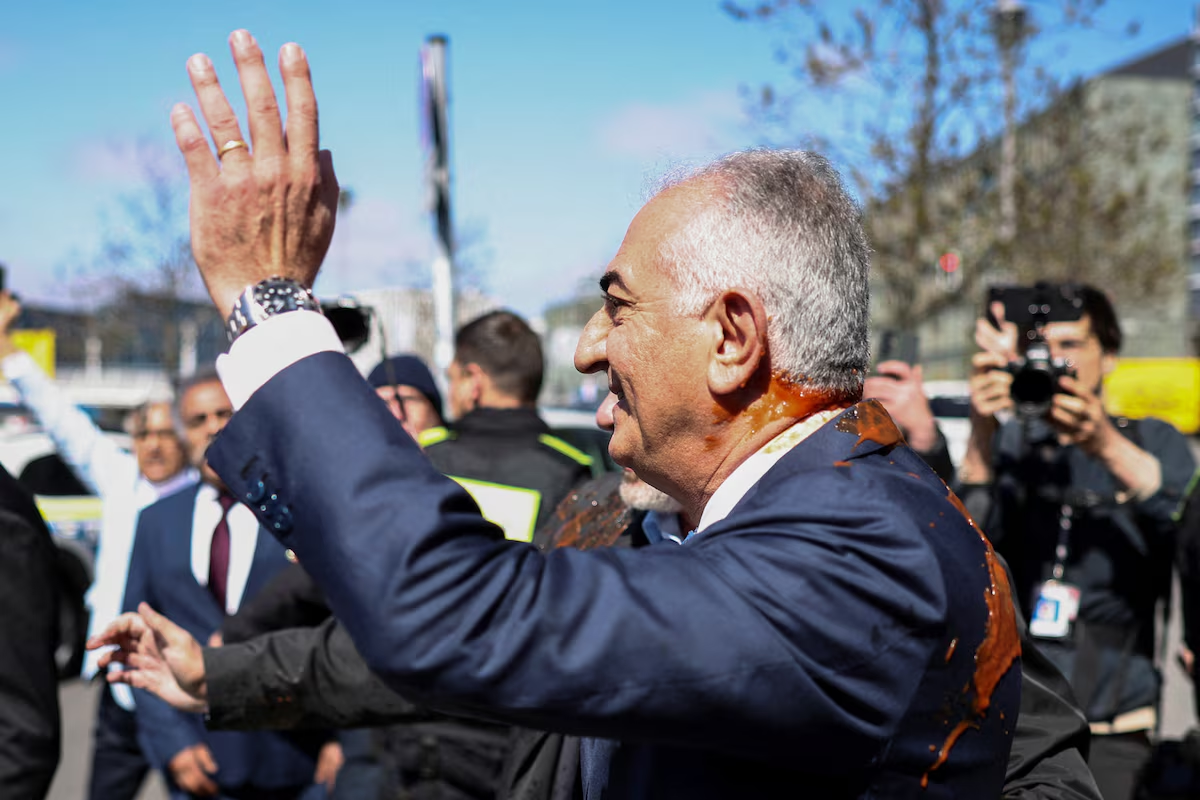
WASHINGTON D.C. — Reza Pahlavi, the exiled crown prince and son of the late Shah of Iran, has launched a renewed diplomatic push, calling on Western powers to move beyond policy “wavering” and provide tangible support to the Iranian democratic opposition.
In a series of high-profile addresses and interviews this week, Pahlavi argued that the current geopolitical climate—marked by heightened regional tensions and internal dissent within Iran—presents a “historic window” for change that the international community cannot afford to ignore.
A Call for “Maximum Support”
While the West has historically leaned toward a policy of “maximum pressure” via economic sanctions, Pahlavi is advocating for a transition to “maximum support” for the Iranian people.
“Sanctions are a tool, but they are not a strategy,” Pahlavi stated. “The strategy must be to empower the Iranian people to reclaim their country. We are not asking for foreign intervention; we are asking for the tools to finish the job ourselves.”
His appeal specifically targets three key areas of cooperation:
Expansion of Labor Strikes: Funding and logistical support to help sustain nationwide strikes that could cripple the clerical establishment’s economic base.
Technological Assistance: Providing advanced tools to bypass state-sponsored internet blackouts, ensuring protesters can organize and share information safely.
Diplomatic Isolation: Urging European and North American allies to officially designate the Islamic Revolutionary Guard Corps (IRGC) as a terrorist organization.
The Vision for a Secular Democracy
Addressing skepticism regarding the role of the monarchy in a future Iran, Pahlavi reaffirmed his commitment to a secular, parliamentary democracy. He emphasized that his goal is not necessarily the restoration of the throne, but rather acting as a “facilitator” for a national referendum.
“My mission is to see the day where Iranians can go to the polls and choose their own form of government—whether that be a republic or a constitutional monarchy,” he said.
Regional Implications
The appeal comes at a time when Western leaders are increasingly concerned about Iran’s role in regional conflicts and its advancing nuclear program. Pahlavi argued that a democratic transition in Tehran is the only permanent solution to Middle Eastern instability.
Critics of the movement, however, remain divided. While Pahlavi enjoys significant name recognition and a surge in domestic popularity among younger generations in Iran, some opposition groups remain wary of his family’s legacy, while Western diplomats worry that overt support for any single figure could complicate existing back-channel negotiations.
What’s Next?
Pahlavi is expected to continue his tour through European capitals later this month. His success will likely depend on whether he can convince Western lawmakers that the Iranian opposition is a unified, viable alternative to the current administration—rather than a fractured movement in exile.
As of Thursday, the U.S. State Department and several EU foreign ministries have not issued official responses to his latest proposal, though many have reiterated their “unwavering support for the human rights of the Iranian people.”