
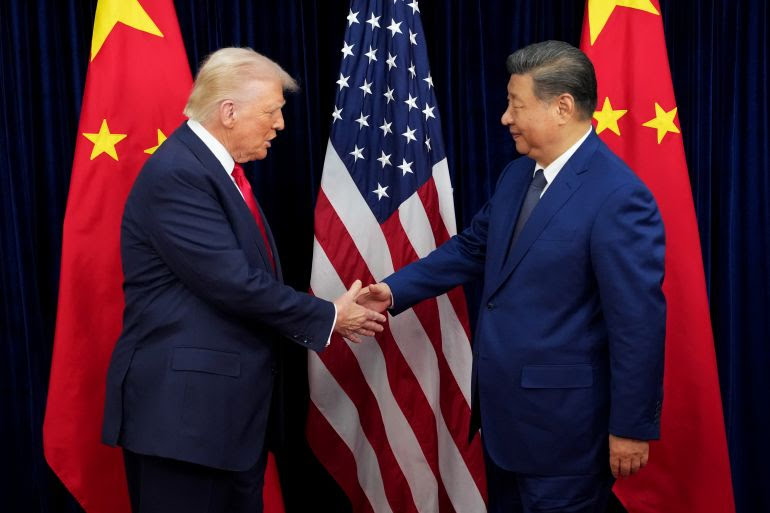
Source Aljajeera
The relationship between Donald Trump and Xi Jinping has been one of the most closely watched dynamics in modern geopolitics. Spanning cooperation, competition, and confrontation, their interactions defined a critical phase in U.S.-China relations during Trump’s presidency.
Their first major encounter came in April 2017, when Xi visited Trump at Mar-a-Lago in Florida. The summit was marked by cordial exchanges and symbolic gestures, including a lavish استقبال, as both leaders sought to establish personal rapport. While the meeting produced limited concrete outcomes, it set the tone for direct leader-level diplomacy between the two nations.
Later that year, Trump traveled to Beijing in November 2017, where he was welcomed with an elaborate state visit. The visit highlighted economic cooperation, with both sides announcing deals worth billions of dollars. However, underlying tensions over trade imbalances and intellectual property issues remained unresolved.
By 2018, the relationship took a sharp turn as the United States imposed tariffs on Chinese goods, triggering a trade war. Xi and Trump met again during the G20 Summit in Buenos Aires, where they agreed to a temporary truce. The pause in hostilities raised hopes for a broader trade agreement, but negotiations proved difficult.
In 2019, another G20 meeting in Osaka saw both leaders restart stalled talks. While there were moments of optimism, disagreements over technology, tariffs, and market access continued to strain ties. The eventual signing of the “Phase One” trade deal in January 2020 marked a partial breakthrough, though it fell short of resolving deeper structural issues.
The final year of Trump’s presidency saw relations deteriorate further amid the COVID-19 pandemic. Accusations over the handling of the outbreak, restrictions on technology companies, and heightened rhetoric pushed ties to one of their lowest points in decades.
Despite periods of engagement, the Trump-Xi era underscored the complexities of managing relations between two global powers. Their interactions revealed both the potential for cooperation and the deep-rooted strategic rivalry that continues to shape global politics today.









