Source HT
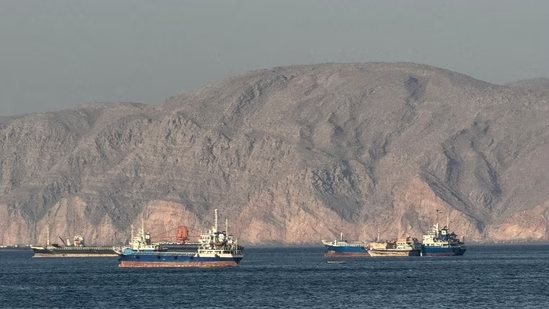
In a swift response to escalating tensions in the Middle East, the United States has asserted that the Strait of Hormuz remains open to international shipping, hours after Iran claimed it had effectively closed the vital maritime corridor.
According to US officials, commercial and military vessels continue to move through the strait without significant disruption. “Traffic is flowing,” a senior US defense official stated, emphasizing that there has been no verified halt in maritime activity despite Tehran’s announcement.
The Strait of Hormuz, one of the world’s most critical oil transit chokepoints, handles nearly a fifth of global petroleum shipments. Any threat to its accessibility often raises immediate concerns about global energy security and potential spikes in oil prices.
Iran’s claim of closure came amid rising geopolitical tensions in the region, though it did not provide clear details on how the restriction would be enforced. Analysts suggest that such declarations may be intended as strategic signaling rather than a fully executed blockade.
The United States has reiterated its commitment to maintaining freedom of navigation in international waters. The US Navy, which regularly patrols the region, remains on high alert but has not reported any hostile engagements linked to the alleged closure.
Meanwhile, global markets reacted cautiously, with oil prices experiencing brief volatility before stabilizing following the US clarification. Shipping companies are closely monitoring the situation but have not issued widespread rerouting advisories.
Experts warn that even rhetorical escalations involving the Strait of Hormuz can have far-reaching consequences, given its strategic importance to both regional economies and global trade.
As the situation continues to develop, diplomatic channels remain active, with international stakeholders urging restraint and dialogue to prevent further escalation in an already sensitive region.