Source AI
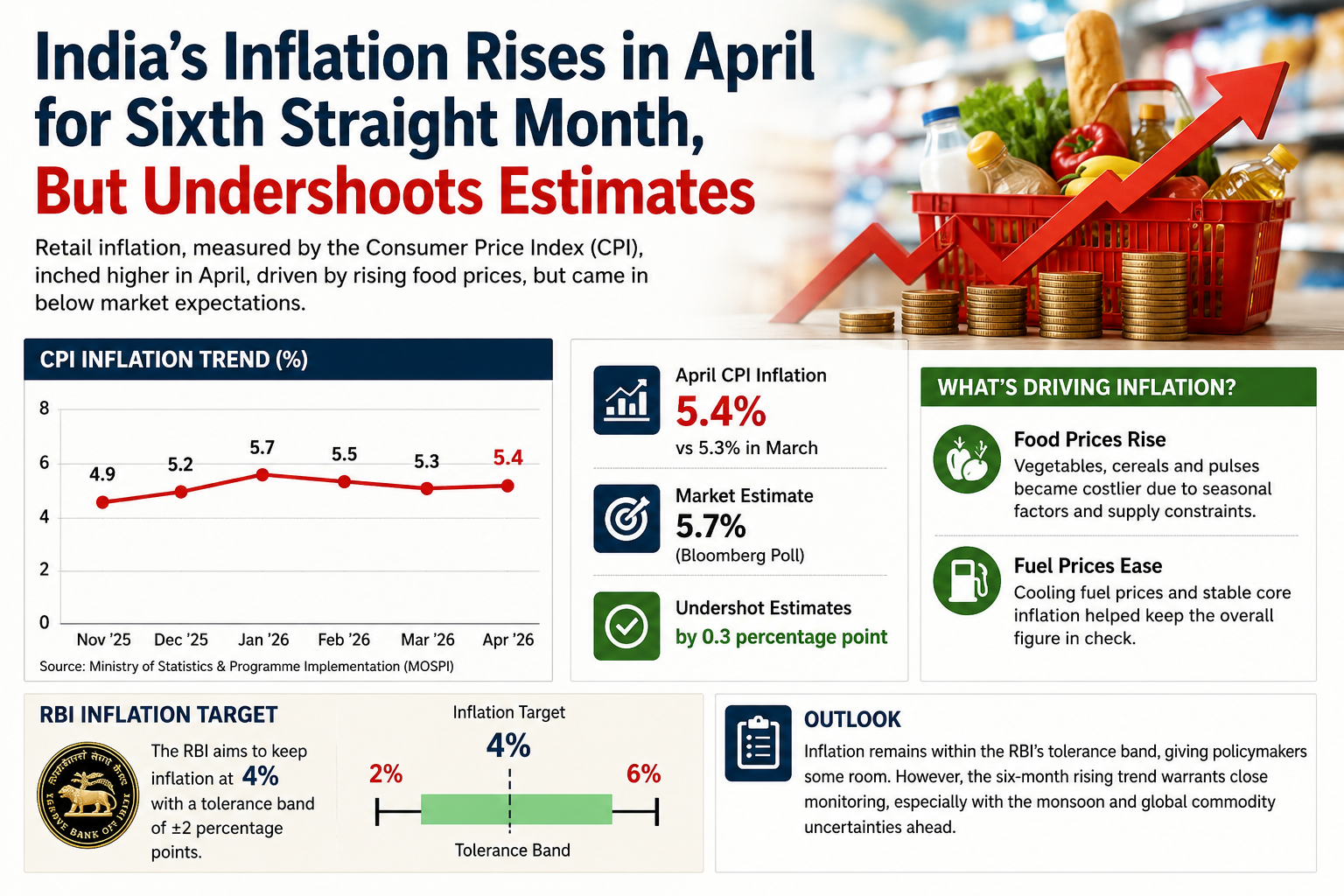
India’s retail inflation continued its upward trend for the sixth consecutive month in April, reflecting persistent price pressures across key sectors. However, the overall inflation rate came in lower than what most economists had anticipated, offering a mixed signal for policymakers and markets.
According to the latest data released by the Ministry of Statistics and Programme Implementation, the Consumer Price Index (CPI)-based inflation rose moderately compared to March. The increase was primarily driven by higher food prices, particularly in essential items such as vegetables, cereals, and pulses. Seasonal fluctuations and supply chain disruptions contributed to the continued rise in food inflation.
Despite the steady climb, the April inflation figure undershot analysts’ estimates, which had projected a sharper increase due to ongoing global commodity uncertainties and domestic supply constraints. Economists noted that easing fuel prices and some stabilization in core inflation components helped keep the overall figure in check.
The data places inflation within the tolerance band set by the Reserve Bank of India, though it remains above the central bank’s ideal target of 4%. This gives the RBI some room to maintain its current policy stance while closely monitoring price trends in the coming months.
Market experts believe that while inflation remains manageable, the consistent upward trajectory could pose challenges if food and fuel prices continue to rise. With the monsoon season approaching, much will depend on rainfall patterns and agricultural output, which play a crucial role in determining food prices in India.
Overall, April’s inflation data highlights a delicate balance—rising cost pressures on one hand and signs of moderation on the other—leaving policymakers with cautious optimism as they navigate the evolving economic landscape.