Source money control
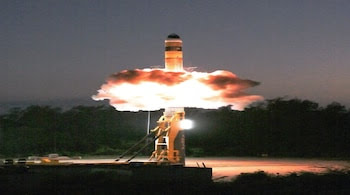
India has taken a major leap in its strategic defence capabilities with the successful upgrade of its long-range ballistic missile, Agni-5, under the ambitious “Mission Divyastra.” The development marks a significant enhancement in the country’s nuclear deterrence posture, enabling it to target multiple locations across vast distances with greater precision and effectiveness.
The key highlight of this advancement is the integration of Multiple Independently Targetable Reentry Vehicles (MIRV) technology. MIRV allows a single missile to carry several nuclear warheads, each capable of striking different targets independently. This drastically increases the missile’s strike potential, making it far more difficult for adversaries to intercept or defend against.
With a strike range exceeding 5,000 kilometers, Agni-5 already placed major regions within its reach. However, the MIRV upgrade significantly expands its strategic scope. The missile can now simultaneously engage multiple high-value targets, strengthening India’s ability to maintain credible minimum deterrence in a rapidly evolving geopolitical environment.
The test, conducted under Mission Divyastra, was overseen by India’s premier defence research body, Defence Research and Development Organisation. Officials described the mission as a “game-changer,” highlighting its role in enhancing the survivability and effectiveness of India’s nuclear arsenal.
Security analysts believe that the upgraded Agni-5 substantially boosts India’s capability to counter threats from both western and northern fronts, particularly from neighboring countries like Pakistan and China. The ability to deploy multiple warheads from a single platform reduces response time and increases operational flexibility during critical situations.
The development also signals India’s growing technological maturity in advanced missile systems. With only a few nations globally possessing MIRV capabilities, India’s entry into this elite group underscores its emergence as a formidable strategic power.
While the government has reiterated its commitment to a “no first use” nuclear doctrine, the Agni-5 MIRV upgrade ensures that India maintains a robust and credible second-strike capability—an essential component of nuclear deterrence.
Mission Divyastra is expected to pave the way for further advancements in India’s missile technology, reinforcing its defence preparedness amid rising global and regional security challenges.