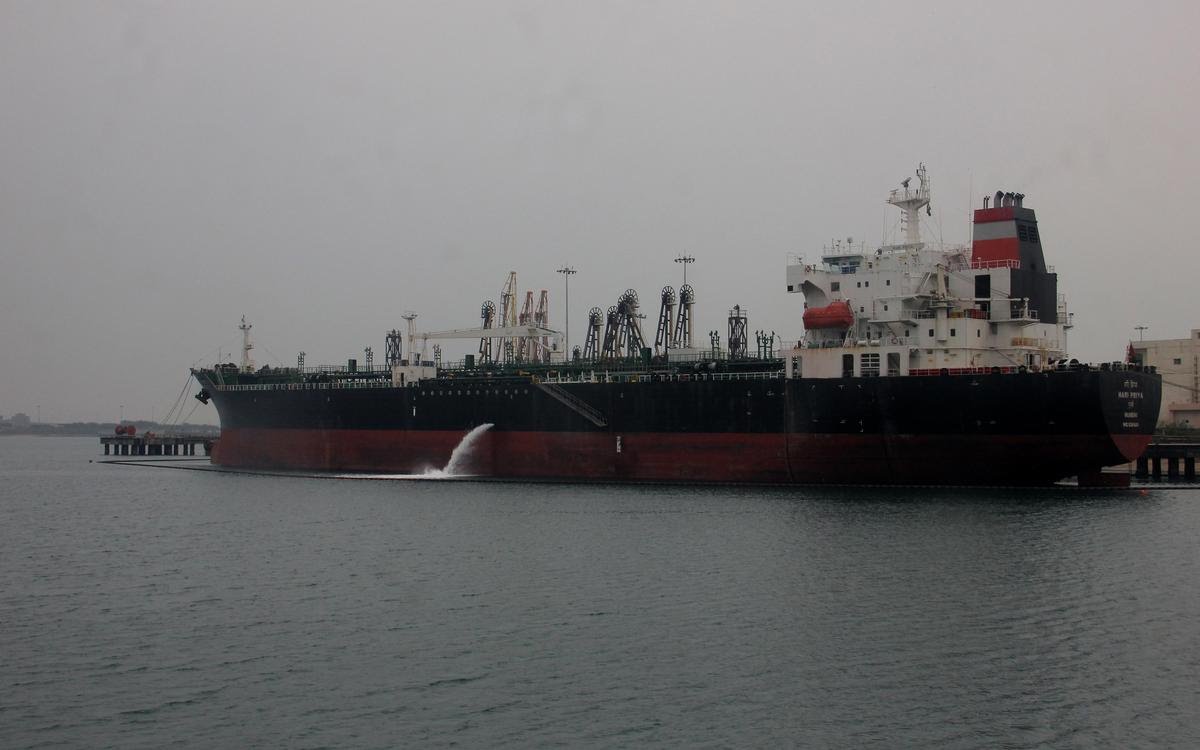
Source The Hindu
NEW DELHI — Indian oil refiners have significantly ramped up crude oil imports from Russia and maintained near-record volumes from the United Arab Emirates (UAE) through June 2026. This aggressive buying strategy serves as a strategic safety buffer while global energy markets await a full recovery of supply lines following the recent closure and subsequent fragile reopening of the Strait of Hormuz.
Data from maritime and commodity intelligence firm Kpler highlights a sharp shift in India’s sourcing patterns, underlining the country’s ongoing efforts to insulate its economy from geopolitical disruptions in the Middle East.
Refiners Lock In Supplies as Chokepoint Recovers
Data compiled through June 19, 2026, reveals that India’s Russian crude imports surged to an average of 2.66 million barrels per day (bpd), up dramatically from 1.91 million bpd in May. This massive influx has cemented Moscow’s position as India’s top oil supplier, now accounting for over half of the country’s total crude imports.
Concurrently, shipments from the UAE remained highly resilient at 636,000 bpd, lingering just below May’s record high of 644,000 bpd.
June 2026 Crude Import Standings (Through June 19)
SupplierJune Volume (bpd)May Volume (bpd)Market Position
Russia~2,660,0001,910,000#1 Supplier
UAE~636,000644,000#2 Supplier
Saudi Arabia~384,000N/A#3 Supplier
Venezuela~209,000N/A#4 Supplier
United States~91,000252,000#5 Supplier
Navigating the Hormuz Crisis
The sudden recalibration of India’s oil diet comes on the heels of major disruptions in the West Asian energy corridor. Iran temporarily closed the strategic Strait of Hormuz—a narrow 33-kilometer waterway responsible for transiting roughly 20% of global oil consumption—following military strikes involving the U.S. and Israel.
While a fragile U.S.-Iran ceasefire agreement late last week initiated a cautious reopening of the strait, experts warn that returning to baseline operations will take time.
“Under our base case of a gradual reopening from early July, the initial focus will be on clearing trapped cargoes and restoring shipping flows before Gulf exporters can materially increase exports,” noted Sumit Ritolia, Senior Manager of Modeling at Kpler.
While crude and Liquefied Natural Gas (LNG) imports weathered the storm relatively well due to quick bilateral pivots, India’s Liquefied Petroleum Gas (LPG) supplies were heavily hit by the chokepoint shutdown. The reopening of the strait is expected to provide the fastest logistical relief to LPG shipments.
Structural Shifts to Last Beyond Reopening
To balance the temporary shortfall of traditional Gulf supplies over the last few months, Indian refiners shifted sharply away from North American barrels due to unfavorable freight economics. U.S. crude imports plummeted to just 91,000 bpd in June from 252,000 bpd in May. Instead, buyers successfully capitalized on heavily discounted Russian grades and increased flexible spot purchases from South America and the Atlantic Basin, including Venezuela.
Even as traditional Gulf heavyweights like Saudi Arabia and Iraq slowly regain their market share with the stabilization of the Strait of Hormuz, analysts project that India’s newly broadened import strategy is here to stay. Cheap Russian Urals and Sokol grades, alongside secure pipeline-backed alternatives from the UAE, have proven economically indispensable to keeping India’s domestic fuel prices stable.