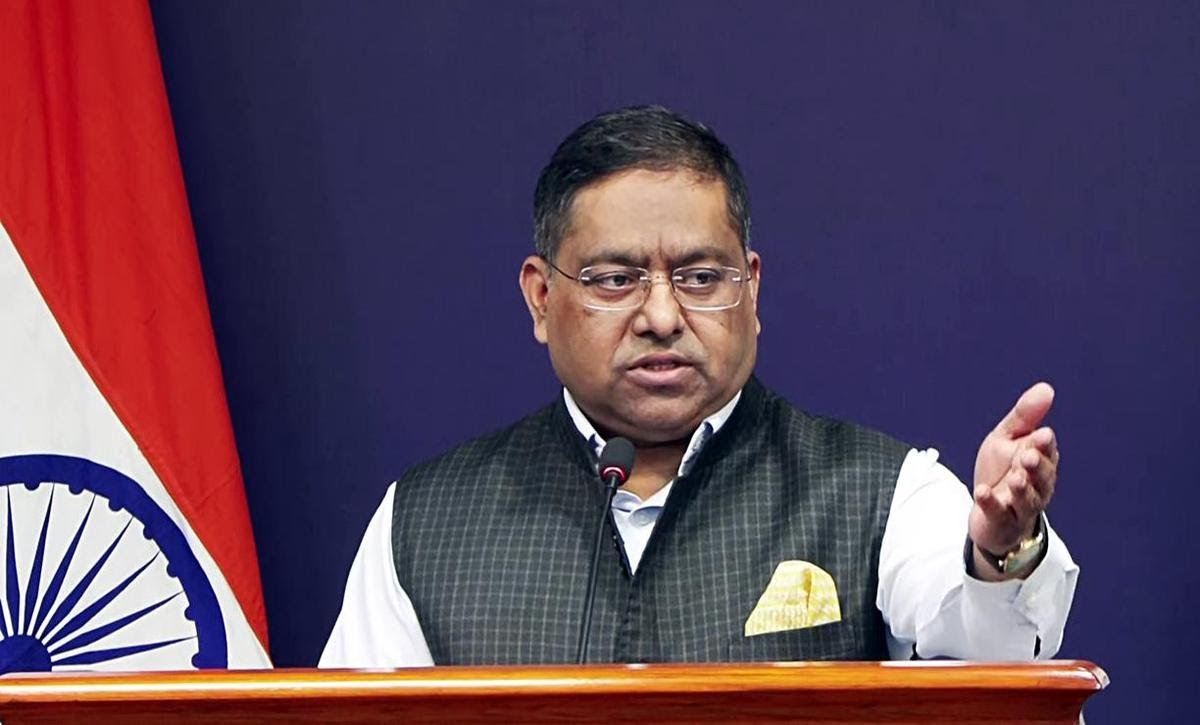
Source The Hindu
India has once again made its position clear on Ladakh, stating that the Union Territory is an integral part of the country. The Ministry of External Affairs (MEA) said that China’s denial of India’s claim cannot change the facts on the ground.
The statement comes amid ongoing differences between New Delhi and Beijing over border issues and territorial claims. India has repeatedly rejected China’s claims over areas that it considers part of its territory.
MEA Repeats India’s Stand on Ladakh
The Ministry of External Affairs has reaffirmed that Ladakh is an integral part of India. The ministry made it clear that statements or claims made by China do not change India’s position on the region.
India has consistently maintained that its borders and territorial claims must be respected. New Delhi has also opposed any attempt to challenge its sovereignty over Ladakh.
The MEA’s statement reflects India’s continued focus on protecting its territorial rights and responding to claims that it considers unacceptable.
India-China Border Dispute Remains a Key Issue
India and China share a long border, parts of which remain disputed. Tensions between the two countries have continued for years, particularly along the Line of Actual Control (LAC), which separates areas under Indian and Chinese control.
The two sides have held several rounds of talks to address border tensions and maintain peace in the region. However, differences over territorial claims remain a major challenge in their relationship.
The border dispute became more serious after the deadly clash between Indian and Chinese troops in the Galwan Valley in June 2020. The incident led to a sharp rise in tensions and affected relations between the two neighbouring countries.
Since then, both sides have taken part in military and diplomatic discussions aimed at reducing tensions and finding ways to manage the situation along the border.
Why Ladakh Is Important for India
Ladakh holds major strategic importance because of its location near the borders of China and Pakistan. Its high-altitude terrain and border areas make it important for India’s national security and defence planning.
The region also has a unique cultural identity, beautiful landscapes and a growing tourism sector. Leh and other parts of Ladakh attract visitors from across India and abroad.
For India, maintaining control over the region is closely linked to its territorial integrity and security interests.
Diplomatic Efforts Continue Between New Delhi and Beijing
Despite their disagreements, India and China have continued diplomatic engagement to manage border tensions. Both countries have an interest in preventing further clashes and maintaining stability along the frontier.
However, territorial claims remain a sensitive issue, and statements from either side can affect the wider relationship.
India’s latest position sends a clear message that it will continue to defend its territorial claims and will not accept China’s denial as a reason to change its stance on Ladakh.
As discussions between the two countries continue, the border issue is likely to remain an important part of their diplomatic relationship. The challenge for both sides will be to manage their differences peacefully while avoiding actions that could lead to fresh tensions.