Source Reuter
Tehran/Washington, Aug 23, 2026 — Iran has strongly rejected the United States’ threat to impose a fresh round of economic sanctions, describing the move as a sign of desperation and insisting that the measures will ultimately fail to weaken the country.
Iranian Foreign Minister Abbas Araghchi said the proposed sanctions reflect Washington’s inability to achieve its objectives through military and economic pressure. He emphasized that previous U.S. actions, including sanctions and military strategies, had not succeeded in forcing Tehran to change its policies, and that the new measures would meet the same fate.
The latest escalation comes amid an already tense geopolitical environment following months of conflict between the two nations. The United States has indicated that it plans to introduce what officials have described as some of the “toughest sanctions in history,” targeting Iran’s economy and potentially penalizing countries that continue trade relations with Tehran.
Despite mounting economic pressure, Iranian officials have maintained a defiant stance. Araghchi reiterated that Iran would not be intimidated by economic warfare and called on the U.S. to pursue dialogue based on mutual respect rather than coercion. He argued that repeated reliance on sanctions demonstrates a lack of viable alternatives in Washington’s strategy.
The sanctions threat is part of a broader U.S. effort to isolate Iran economically and diplomatically. However, Tehran has warned that such measures could further destabilize the region. Iranian leaders have also hinted at potential retaliatory steps if additional restrictions are imposed, raising concerns about escalation in an already volatile Middle East.
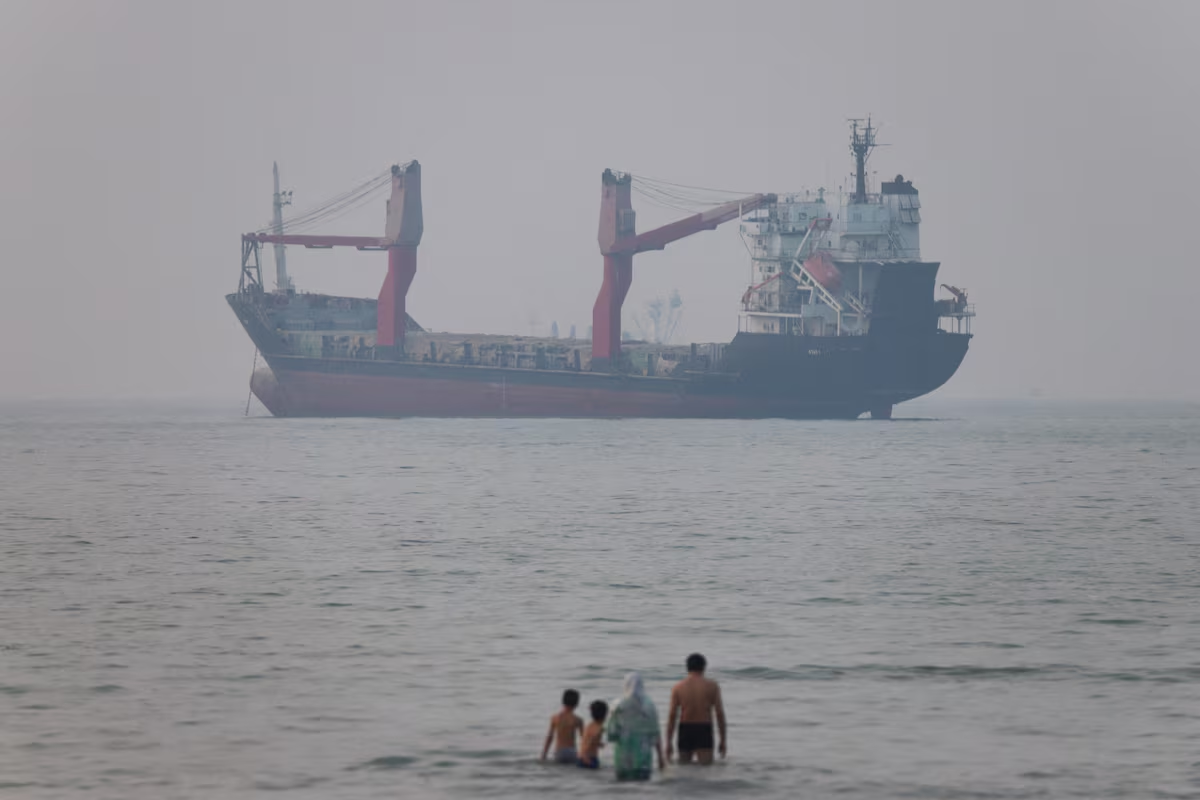
The ongoing standoff has had significant global implications, particularly for energy markets. Iran continues to exert influence over the strategically vital Strait of Hormuz, a key route for global oil shipments. Disruptions in the region have contributed to rising oil prices and heightened uncertainty in international trade.
Meanwhile, diplomatic efforts remain uncertain. While Iran has expressed willingness to engage in negotiations, it insists that talks must be conducted without threats or pressure. The United States, on the other hand, appears committed to intensifying economic measures as a primary tool of leverage.
Analysts warn that the continued exchange of threats could deepen the stalemate between the two nations, reducing the chances of a near-term resolution. With both sides holding firm to their positions, the prospect of further escalation—either economic or military—remains a significant concern for the international community.
As tensions persist, global leaders have called for restraint and renewed dialogue to prevent the situation from spiraling into a broader conflict. For now, however, Iran’s message remains clear: it sees the latest U.S. sanctions threat not as a turning point, but as a continuation of a strategy it believes has already failed.