Source NDTV
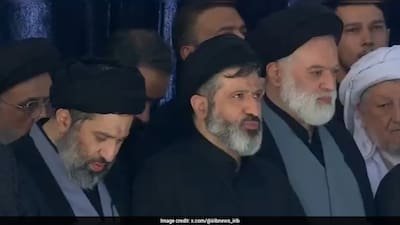
Tehran witnessed a significant public and political moment as three sons of Iran’s Supreme Leader, Ali Khamenei, attended a high-profile funeral ceremony in the capital. The event drew attention not only for its scale and symbolism but also for the notable absence of one key figure—Mojtaba Khamenei—who has long been speculated as a potential successor.
The funeral, held in Tehran, was attended by political leaders, military officials, and thousands of citizens. The presence of three of Khamenei’s sons underscored the family’s continued public visibility and influence within Iran’s political and religious establishment. However, Mojtaba Khamenei’s absence quickly became a focal point of discussion among observers and analysts.
Mojtaba, often considered a powerful yet discreet figure within Iran’s political structure, has maintained a relatively low public profile despite ongoing speculation about his role in the country’s future leadership. His decision to skip the ceremony has fueled fresh debate over internal dynamics within the ruling establishment and the evolving question of succession.
While Iranian state media highlighted the unity and solemnity of the occasion, it made no direct reference to Mojtaba’s absence. Political analysts suggest that such omissions are not unusual but can carry deeper implications in a system where symbolism often plays a critical role.
The funeral itself was marked by traditional rituals, speeches, and a strong security presence. It served as both a moment of mourning and a display of continuity within Iran’s leadership circle.
As discussions around succession continue to surface periodically, public appearances—or the lack thereof—by key figures like Mojtaba Khamenei remain closely scrutinized. For now, the event has added another layer of intrigue to Iran’s complex political landscape.