Source TOI
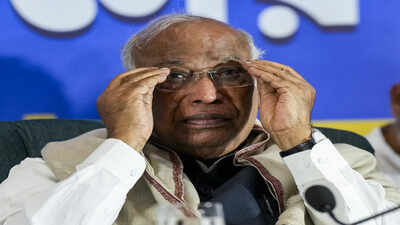
NEW DELHI – In a sharp escalation of the ongoing war of words between India’s two largest political parties, Congress President Mallikarjun Kharge clarified his recent controversial comments on Tuesday, asserting that he never labeled Prime Minister Narendra Modi a “terrorist.”
Instead, Kharge pivoted the attack, accusing the Prime Minister of consistently using “threatening language” and “intimidation tactics” against the opposition to mask his government’s failures.
The Clarification
The controversy erupted following a public address where Kharge’s remarks were interpreted by some as a personal attack on the PM’s character. Speaking to reporters today, the veteran leader sought to set the record straight.
“I never said the Prime Minister is a terrorist. What I said was that his style of functioning and his language often lean toward threatening others. In a democracy, the head of the government should inspire confidence, not fear,” Kharge stated.
Kharge further argued that the BJP frequently misquotes opposition leaders to divert public attention from pressing issues like unemployment and inflation.
BJP Hits Back: “Political Frustration”
The Bharatiya Janata Party (BJP) was quick to dismiss Kharge’s clarification, describing it as a desperate attempt at damage control. Senior BJP leaders launched a coordinated counter-offensive, labeling the Congress chief as “frustrated” by the party’s dwindling electoral fortunes.
The BJP’s rebuttal centered on three main points:
Lack of Decorum: The party claimed that the Congress has hit a “new low” in political discourse by targeting the Prime Minister.
Misleading the Public: BJP spokespersons argued that Kharge’s original comments were clear and that his “clarification” is a tactical retreat.
Election Fatigue: The ruling party suggested that the “vituperative attacks” are a sign of the Congress party’s inability to challenge the BJP on policy grounds.
A Rising Political Temperature
This latest spat comes as both parties gear up for critical state elections. Political analysts suggest that the rhetoric is only likely to sharpen. While the Congress is attempting to frame the PM as an “authoritarian figure,” the BJP is successfully using such attacks to portray the opposition as “anti-national” or “disrespectful” to the office of the Prime Minister.
As the 2026 political calendar heats up, the line between policy debate and personal animosity continues to blur, leaving the electorate to navigate a landscape of increasingly polarized narratives.