Source Money control
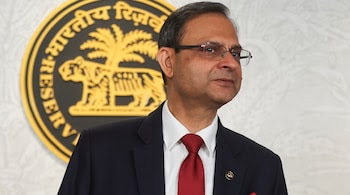
MUMBAI — In a major financial development, the Reserve Bank of India (RBI) on Friday approved a record surplus transfer of ₹2,86,588.46 crore (approximately ₹2.87 lakh crore) to the Central Government for the financial year 2025-26.
The decision was finalized during the 623rd meeting of the RBI’s Central Board of Directors, chaired by Governor Sanjay Malhotra. This mega-dividend surpasses last year’s payout of ₹2.69 lakh crore and provides a substantial fiscal cushion to the government amid evolving global economic strains and geopolitical uncertainties, including volatile crude oil prices driven by the Middle East crisis.
Strong Financial Performance Drives Payout
The record-breaking dividend is backed by stellar growth across the central bank’s financial operations over the past fiscal year.
Income Surge: The RBI’s gross income jumped 26.42% during FY26.
Net Profit Growth: Net income before risk provisions and statutory transfers climbed to ₹3,95,972.10 crore, up significantly from ₹3,13,455.77 crore in FY25.
Balance Sheet Expansion: The central bank’s overall balance sheet expanded by 20.61%, reaching a massive ₹91,97,121.08 crore as of March 31, 2026.
Fortifying the Shield: Contingent Risk Buffer Sharply Increased
While the central bank distributed unprecedented funds to the Centre, it simultaneously prioritized internal financial stability. Under the revised Economic Capital Framework (ECF), which allows a flexible safety buffer between 4.5% and 7.5%, the RBI opted to keep its guard up.
The Board approved a massive transfer of ₹1,09,379.64 crore to its Contingent Risk Buffer (CRB) for FY26—more than double the ₹44,861.70 crore allocated in the previous fiscal year. This keeps the central bank’s emergency risk cushion at a comfortable 6.5% of its overall balance sheet size.
Historical Perspective of RBI Payouts
The central bank’s dividend trajectory highlights consecutive years of aggressive wealth generation:
Fiscal Year Surplus Transferred to Government
FY26 ₹2,86,588.46 crore (Record High)
FY25 ₹2,69,000 crore
FY24 ₹2,10,874 crore
FY23 ₹87,416 crore
What This Means for the Economy
The timing of this payout is highly strategic for the Union Government. According to budget estimates, the Centre anticipated roughly ₹3.16 lakh crore in total dividends from the RBI, public sector banks, and financial institutions combined for the upcoming cycle. Achieving ₹2.87 lakh crore from the central bank alone covers the lion’s share of that target.
Economists note that this massive liquidity injection will offer the government immense financial flexibility. It provides immediate levers to offset potential tax revenue slowdowns, manage rising subsidy bills driven by international energy crunches, and aggressively fund infrastructure projects without expanding market borrowings.