
Source NDTV
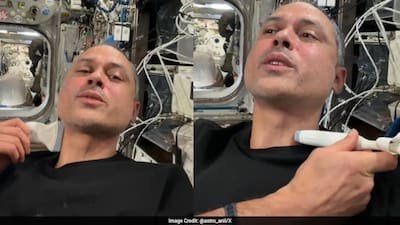
Aboard the International Space Station (ISS), even the simplest routine tasks transform under the physics of microgravity—and clinical medicine is no exception. NASA astronaut and emergency physician Dr. Anil Menon recently provided a rare, behind-the-scenes look into how crew members conduct critical health assessments orbiting over 400 kilometers above Earth. Demonstrating an ultrasound examination in weightlessness, Dr. Menon detailed how off-planet diagnostics rely on strict choreography, specialized equipment, and direct collaboration with medical teams on the ground.
In a demonstration shared from the orbital laboratory, Dr. Menon highlighted that space-based examinations require close teamwork. Unlike a standard clinic on Earth where a physician operates machinery independently, ultrasound exams on the station are divided between crew members. One astronaut handles the ultrasound probe against the patient, while another operates the imaging controls and system settings.
Simultaneously, a ground-based team consisting of a remote guider and flight surgeons monitors the live video stream from mission control in real time. This Earth-bound team directs the probe’s angle down to millimeter adjustments, ensuring astronauts capture diagnostic-quality scans and analyzing findings immediately should follow-up intervention be required.
The motivation behind these ongoing checkups goes far beyond routine monitoring. Without gravity pulling fluids toward the lower extremities, astronauts experience substantial fluid shifts toward the head and chest. This redistribution creates significant cardiovascular adaptations. Scientists and physicians remain particularly vigilant about changes in vascular dynamics, as microgravity disrupts typical blood flow patterns and can increase the risk of deep vein thrombosis or blood clot formation during extended stays.
Dr. Menon’s background makes him uniquely suited for this operational frontier. Before joining NASA’s astronaut corps, Menon served as an active-duty flight surgeon, emergency medicine physician, and medical director, treating patients in acute trauma environments and supporting spaceflight recoveries. Experiencing microgravity firsthand allows physician-astronauts like Menon to bridge the gap between clinical theory and orbital reality.
As space agencies target long-duration missions to the Moon and Mars, telemedicine capabilities must evolve. While ISS crews currently benefit from real-time coaching via low-latency communications with Earth, deep-space voyages will involve multi-minute delays. The techniques demonstrated by Menon lay the groundwork for autonomous diagnostic systems, where future crews can leverage intelligent imaging tools and peer-to-peer protocols when direct communication with ground physicians is impossible.









