Source The Hindu
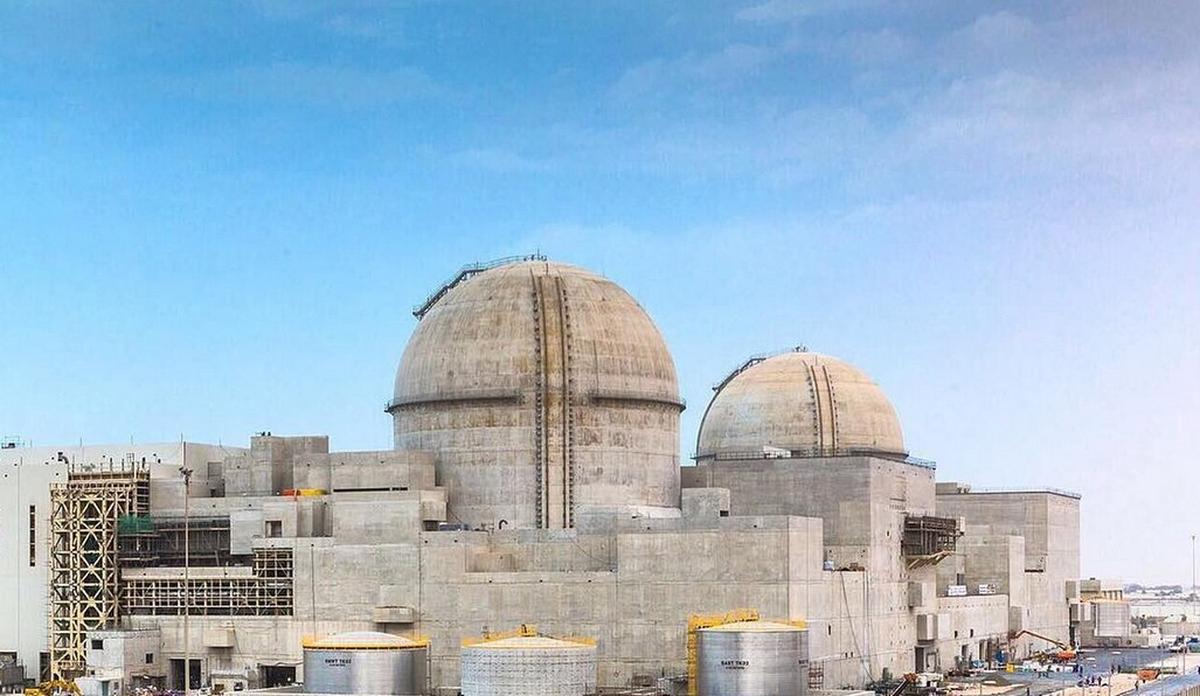
DUBAI — A dangerous new flashpoint emerged in the ongoing regional conflict on Sunday after a drone strike targeted the United Arab Emirates’ Barakah Nuclear Power Plant, sparking a fire on its perimeter and threatening to unravel a fragile ceasefire.
The Abu Dhabi Media Office confirmed that emergency crews responded to a fire in an external electrical generator located outside the inner perimeter of the facility, situated in the remote Al Dhafra region. Officials quickly moved to de-escalate public panic, stating that the incident resulted in zero injuries and had no impact on the plant’s structural integrity or radiological safety levels.
The Federal Authority for Nuclear Regulation (FANR) re-affirmed that all vital systems are functioning normally and that the plant’s reactors continue to supply electricity to the grid as usual. The International Atomic Energy Agency (IAEA) noted that it is monitoring the situation closely and remains in constant contact with Emirati authorities.
A “Dangerous Escalation”
While no group has officially claimed responsibility for the strike, the UAE Ministry of Defense revealed that three drones had crossed into the country from its western border. Air defense systems successfully intercepted two of the unmanned aerial vehicles (UAVs), while the third impacted the generator.
The UAE Foreign Ministry issued a scathing rebuke Sunday evening, labeling the strike a “dangerous escalation” and asserting its right to protect its borders. “The UAE emphasizes that it will not tolerate any threat to its security and sovereignty under any circumstances,” the ministry statement read.
Suspicion has heavily fallen on Iran, which has maintained a geopolitical deadlock with Israel and the United States despite a highly volatile, fragile truce. Prior to Sunday’s attack, the UAE had faced a series of missile and drone threats to its critical energy infrastructure, particularly as the Gulf nation hosts defensive systems and has retained deep diplomatic ties with Western allies throughout the broader war.
Broader Ceasefires Splintering
The attack on the Arab world’s premier civilian nuclear facility comes at a time when diplomatic talks to transform the current cessation of hostilities into a permanent peace deal have hit a dead end. In Tehran, state media reported that recent U.S. proposals offered “no tangible concessions,” with disagreements over shipping lanes, frozen assets, and the blockade of Iranian ports keeping the diplomatic process stalled.
Compounding the crisis, the Levant front is experiencing its own severe tremors. Despite a newly minted 45-day extension to the Israel-Lebanon ceasefire, Israeli forces launched a wave of heavy airstrikes across southern and eastern Lebanon on Saturday and Sunday following mandatory evacuation orders for several villages. In response, Israeli military officials reported that Hezbollah fired roughly 200 projectiles over the weekend, utilizing low-cost fiber-optic first-person-view (FPV) drones to target IDF positions.
As smoke clears from the perimeter of the Barakah facility, regional analysts warn that striking a nuclear site—even an external component—crosses a psychological threshold. With global energy markets already volatile from the ongoing blockade of the Strait of Hormuz, the drone strike in Abu Dhabi signals that the Middle East remains dangerously close to a return to full-scale warfare.