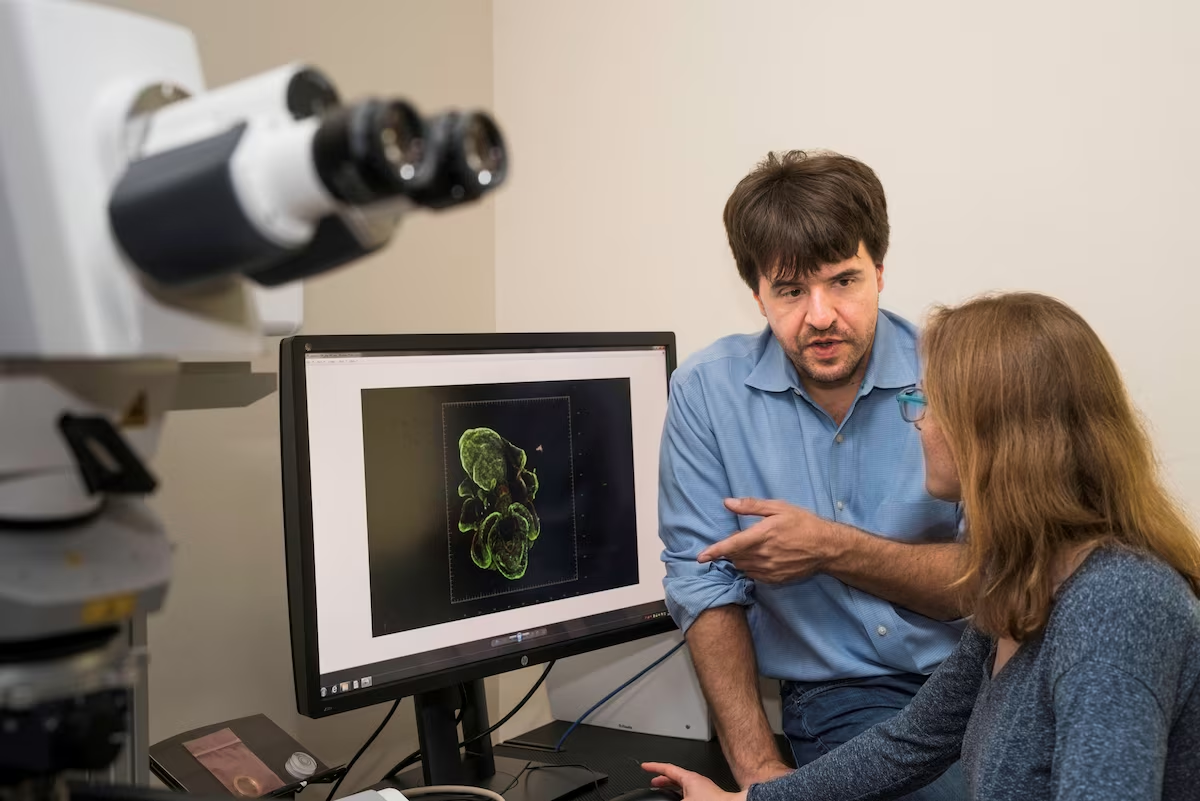
Source Reuters
A Major Win for Science and Medicine
Scientists from the United States and Germany have been awarded the Nobel Prize in Medicine for their groundbreaking work on how light can be used to study and control brain activity. Their research has opened a new path in understanding how the brain works and how diseases related to it can be treated in the future.
The prize recognizes years of hard work in a field that connects biology, physics, and technology. Their discovery has already changed how scientists study the brain and is expected to lead to better treatments for conditions like Parkinson’s disease, depression, and epilepsy.
What Is This Discovery About?
The scientists developed a method that uses light to control brain cells. This technique, often called “optogenetics,” allows researchers to turn specific brain cells on or off using light signals. It may sound simple, but it has given scientists a powerful tool to study how different parts of the brain work together.
Before this, it was very difficult to understand the role of individual brain cells. Now, with this method, scientists can observe how certain cells behave and how they affect actions, thoughts, and emotions.
How It Helps in Understanding the Brain
The human brain is one of the most complex organs in the body. It controls everything we do, from breathing to thinking. By using light-based tools, scientists can now study the brain in a more detailed way than ever before.
This research has helped experts understand how signals move inside the brain. It has also shown how problems in these signals can lead to mental and physical health issues. This deeper understanding is important for finding new ways to treat brain disorders.
Impact on Future Treatments
One of the most exciting parts of this discovery is its potential in medicine. Doctors may be able to use similar techniques in the future to treat serious brain conditions. For example, it could help control abnormal brain activity in epilepsy or improve movement in patients with Parkinson’s disease.
Although this technology is still mainly used in research labs, scientists are hopeful that it will soon be used in hospitals. More studies are being done to make sure it is safe and effective for human use.
A Global Achievement
The Nobel Prize shows how international teamwork can lead to major scientific breakthroughs. The collaboration between US and German scientists highlights the importance of sharing knowledge and working together across borders.
Experts around the world have praised this discovery as a turning point in brain research. It is not just a win for the scientists but also for the future of medicine.
Looking Ahead
This achievement marks an important step forward, but it is only the beginning. Scientists believe there is still much to learn about the brain. With tools like this, the journey to understanding the human mind has become clearer and more hopeful.
The Nobel Prize celebrates not just a discovery, but a new way of thinking about science and medicine—one that uses innovation to improve lives across the world