
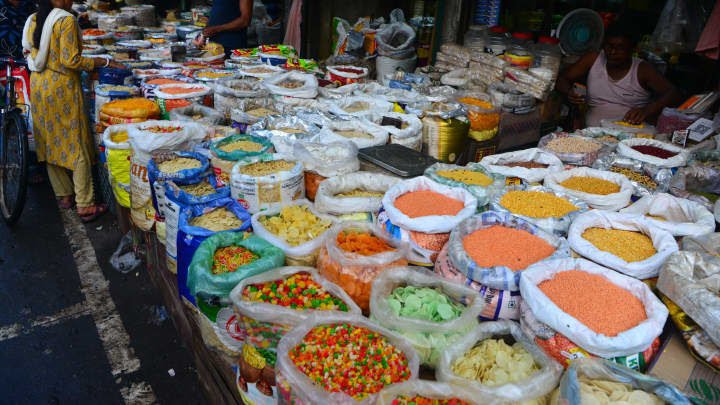
Source CNBC
NEW DELHI — India’s retail inflation accelerated to 4.82% in August on an annual basis, up from 4.45% in July, marking an upward trajectory driven primarily by surging food prices and elevated service costs.
Data released by the Ministry of Statistics and Programme Implementation (MoSPI) showed that price gains continued to breach the Reserve Bank of India’s (RBI) medium-term target of 4.0%. The reading slightly edged past consensus projections in a Reuters poll of economists, which had pegged headline inflation around 4.80%.
Food and Services Drive the Spike
A significant contributor to the August uptick was the Consumer Food Price Index (CFPI), which climbed to 5.95% year-on-year from 5.52% in July. Kitchen staples such as onions, garlic, and ginger registered sharp price increases, aggravated by irregular monsoon patterns and local supply-chain bottlenecks.
Beyond essential commodities, inflationary pressure broadened across the consumer basket:
Personal Care & Miscellaneous: Jumped 15.17%, with precious metals including gold, silver, and platinum jewellery seeing steep hikes.
Hospitality & Dining: Restaurant and accommodation charges rose 8.38%, alongside an 8.41% increase in prepared food and beverage services.
Transport: Remained firm at 4.60%, sustained by sticky global energy prices and transportation overheads.
Rural Households Bear the Heavier Burden
Price pressures showed a distinct geographical divergence. Retail inflation in rural areas reached 5.23% in August, while urban inflation stood lower at 4.31%. Rural food inflation was notably severe at 6.13%, compared with 5.64% in urban centers, disproportionately impacting lower-income rural budgets where groceries represent a larger share of household expenditure.
State-level disparities were equally pronounced. Telangana reported the highest rate of price growth across the country at 6.27%, while Delhi recorded the lowest among states and union territories at 2.61%.
Policy Implications for the RBI
The persistent climb complicates the outlook for monetary easing. With Wholesale Price Index (WPI) inflation simultaneously quickening to 9.92% in August, input costs threaten to spill over into finished goods.
While the central bank previously maintained that food price spikes could be seasonal, consecutive increases across non-food segments suggest broader underlying demand and cost-push factors. Economists expect the RBI’s Monetary Policy Committee (MPC) to retain a cautious stance and hold benchmark repo rates steady in upcoming reviews to anchor medium-term inflation expectations.









