
Source Bar and Bench
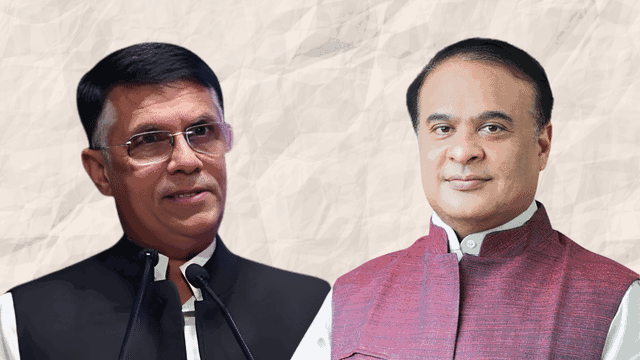
NEW DELHI — In a stern rebuke of the intersection between high-office authority and political rivalry, the Supreme Court of India on Friday granted anticipatory bail to Congress leader Pawan Khera. While providing relief to Khera, the apex court explicitly flagged “unparliamentary” remarks made by Assam Chief Minister Himanta Biswa Sarma, suggesting that the legal machinery was being leveraged for political retribution.
A Case Bathed in “Political Rivalry”
The bench, comprising Justice J.K. Maheshwari and Justice Atul S. Chandurkar, observed that the criminal case against Khera—stemming from allegations he made regarding the assets and passports of the Chief Minister’s wife, Riniki Bhuyan Sarma—appeared to be prima facie “politically motivated.”
The Court noted that the escalation of the case into a criminal matter involving forgery and defamation seemed less about custodial necessity and more about a “political angle.”
“The right to personal liberty is a cherished fundamental right, and any deprivation thereof must be justified on a higher threshold, particularly where the surrounding circumstances may indicate the presence of political overtones,” the Bench stated in its 22-page order.
The CM’s “Unparliamentary” Rhetoric
The Supreme Court took specific exception to public statements made by Chief Minister Sarma during the recent Assembly elections. The Court highlighted that while Khera’s allegations against the CM’s wife were aimed at gaining political momentum, the CM’s response crossed a line for a constitutional head.
The Court referred to specific statements made by Sarma in April 2026, including:
A comment where the CM threatened to “knock out” (using the term pelunga) Khera.
A statement suggesting that if the Model Code of Conduct were not in force, he would have had Khera “deplaned and brought back midway” during a journey.
The bench remarked that it “cannot lose sight of the fact that the Chief Minister… has made certain unparliamentary remarks against the Appellant in various press statements.”
High Court’s “Erroneous” Approach
The ruling also served as a correction to the Gauhati High Court, which had previously denied Khera bail. The Supreme Court termed the High Court’s findings “erroneous,” noting that it had wrongly shifted the burden of proof onto the accused and included observations on legal provisions (specifically under the Bharatiya Nyaya Sanhita) that were not even part of the original FIR.
Terms of Release
While granting protection from arrest, the Supreme Court laid down strict conditions for Pawan Khera:
Full Cooperation: Khera must appear before the investigating officer whenever summoned.
Travel Restrictions: He is barred from leaving the country without prior permission from the competent court.
No Interference: He must refrain from influencing witnesses or tampering with any evidence.
The Court clarified that these observations are limited to the bail proceedings and should not influence the eventual merits of the trial, where the veracity of Khera’s allegations will be tested.
The Takeaway: The judgment sends a clear message to state leaderships across India: the Supreme Court will not remain a silent spectator when the state’s power of arrest is used as a tool for “Constitutional Cowboyism” in political feuds.









