Source reuter
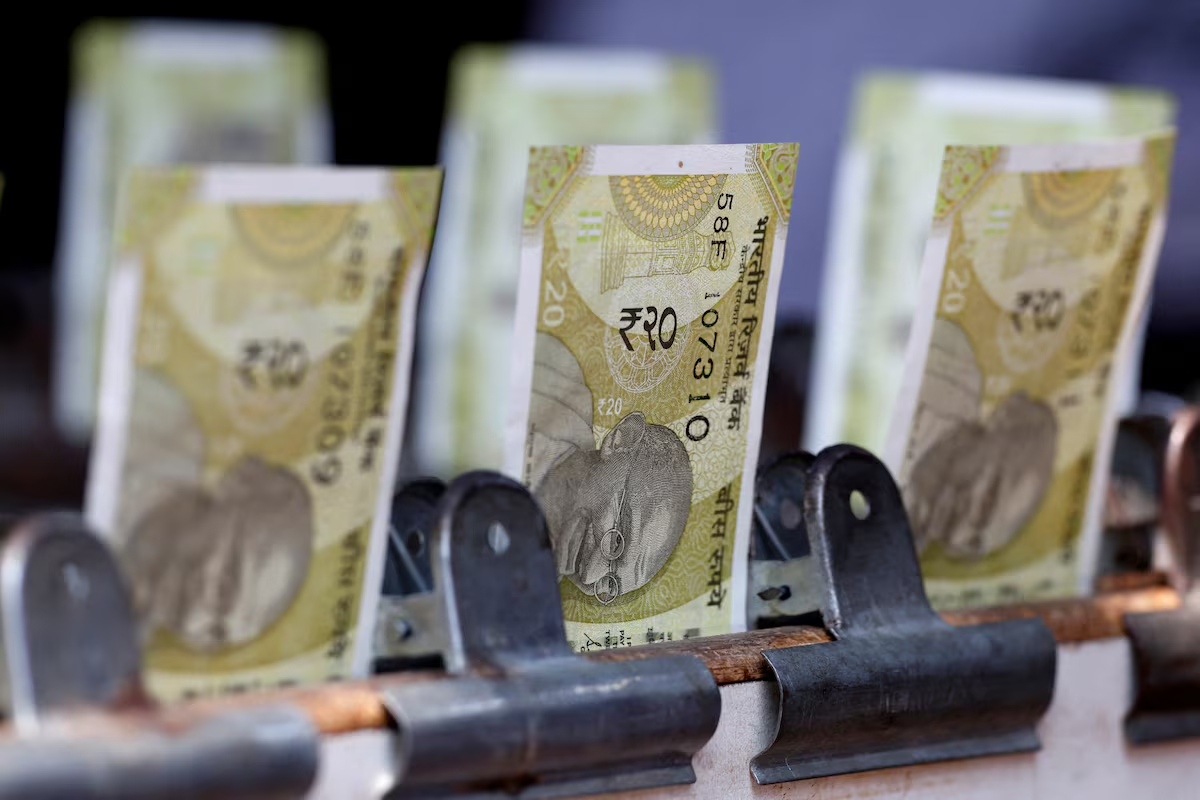
MUMBAI — The Indian rupee plunged to a historic intraday low of 95.34 against the U.S. dollar on Thursday, April 30, 2026, forcing the Reserve Bank of India (RBI) into a high-stakes defensive posture.
The currency’s sharp decline was triggered by a perfect storm of geopolitical and economic factors, most notably the surge in Brent crude prices, which topped $126 per barrel following a breakdown in West Asia ceasefire talks. For India, a net energy importer, the skyrocketing cost of oil has intensified fears of a widening trade deficit and sticky inflation.
Key Drivers of the Slide
The rupee has now lost nearly 6% of its value since the start of 2026. Market analysts point to three primary catalysts for this week’s “bloodlust” in the forex markets:
Surging Energy Costs: With crude hitting levels not seen since the 2022 Russia-Ukraine conflict, dollar demand from oil importers has overwhelmed the market.
Foreign Capital Outflows: Foreign Portfolio Investors (FPIs) have pulled over $20 billion from Indian equities so far this year, seeking “safe-haven” assets in the U.S.
Hawkish Federal Reserve: Sustained inflationary pressure in the U.S. has kept the Federal Reserve from cutting rates, further strengthening the greenback against emerging market currencies.
The RBI’s Defensive Playbook
The central bank has not been a silent spectator. In March alone, the RBI reportedly sold more than $40 billion in foreign exchange reserves to cushion the currency’s fall. On Thursday, heavy intervention was again noted, helping the rupee recover slightly from its intraday trough to close at 94.92.
“What we are witnessing is a textbook reflexive trade,” said Anindya Banerjee, Head of Commodity & Currency at Nuvama Professional Clients Group. “The combination of oil demand and FII outflows is overwhelming whatever defense the RBI is putting up.”
While the RBI’s foreign exchange reserves remain robust, the focus has shifted from “defending a specific level” to “managing volatility.” Traders suggest that unless global energy prices stabilize, the rupee could face a difficult journey toward the 97-mark in the coming months.
Economic Impact
The breach of the 95-level is expected to have immediate ripple effects:
Imported Inflation: Goods ranging from electronics to edible oils are likely to see price hikes.
Corporate Margins: Companies with significant external commercial borrowings (ECBs) or those reliant on imported raw materials will face increased cost pressures.
Education and Travel: Indian students and travelers heading abroad will see their costs rise significantly as the purchasing power of the rupee diminishes.
As the West Asia crisis continues to block key trade routes like the Strait of Hormuz, all eyes remain on the central bank’s next move to stabilize the domestic currency.