Source The Hindu
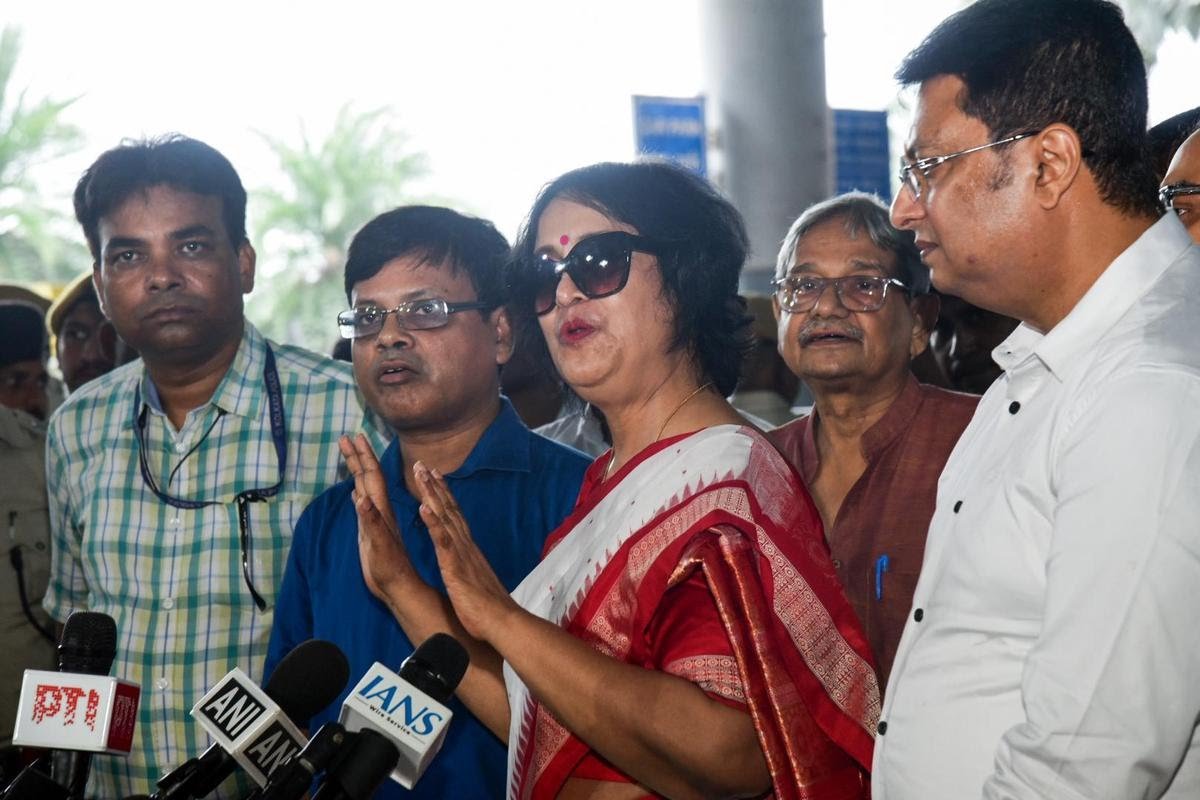
KOLKATA — Nearly two decades after being forced out of the city she had chosen as her sanctuary, exiled Bangladeshi author Taslima Nasrin returned to Kolkata, describing her arrival as a deeply emotional homecoming to a place she still considers her true home.
Arriving at the Netaji Subhas Chandra Bose International Airport from New Delhi, Nasrin greeted standard-bearers, organizers, and onlookers with folded hands, stating simply that she was “feeling very good to be back”. The brief arrival marked her first return to the West Bengal capital since November 2007, when violent street protests over her writings led the then-state administration to move her out of Kolkata.
A Long-Awaited Homecoming
Nasrin’s return signals a major personal and symbolic milestone. After being forced to leave Bangladesh in 1994 following death threats and fatwas triggered by her novel Lajja—which critiqued religious fundamentalism and the persecution of minorities—she sought refuge across Europe and the United States before moving to Kolkata in 2004. The city offered her a shared Bengali language, rich cultural history, and a vibrant literary community.
“I feel as though I am returning to my own country,” Nasrin remarked reflecting on her journey. “Bengal has never been divided in my heart by a border or a barbed-wire fence. The door to the eastern part of Bengal remains closed to me, so for now, this part of Bengal is my home.”
She noted that she was returning “with joy, but also with pain,” recalling how Kolkata had provided her with a community of readers, friends, and belonging before political pressures cut her stay short in 2007.
The 2007 Departure and Years in Exile
Nasrin’s exile from Kolkata in 2007 remains one of the most debated chapters in the state’s modern literary and political landscape. Following severe violent demonstrations in parts of the city over controversial sections of her memoir Dwikhandito, the state government requested her departure to maintain public order.
She was subsequently moved to New Delhi under central security protection. Although she continued to live in India and travel internationally over the next 19 years, her repeated requests to visit or settle back in Kolkata remained unfulfilled.
In interviews following her return, Nasrin expressed her relief that the “door” to the city had finally reopened.
“I extend my heartfelt thanks to the authorities; the door that was once closed has finally opened. I want this door to remain open so that I can come and breathe the free, open air of Bengal whenever I wish.”
— Taslima Nasrin
Literary Presence and Broader Significance
Her visit centers around a public appearance at Rabindra Sadan for an anti-fundamentalism literary gathering, where she is scheduled to recite poetry and address the audience. Organizers emphasize that the gathering celebrates free expression and a lifetime of standing up against religious extremism.
When asked about those who had opposed her stay years ago, Nasrin reaffirmed her belief in democratic ideals and open discourse. “If there is no freedom of speech, if books are banned, or if people are sent into exile, then the right to expression is violated,” she noted. “Everyone who loves democracy should uphold freedom of speech.”
Regarding her ancestral homeland, Nasrin expressed pessimism about returning to Bangladesh, calling it an impossible prospect under current conditions. For the acclaimed writer, Kolkata remains the closest link to her roots—a place where her words and presence have once again found a stage after almost two decades away.