Source TOI
Srinagar — Omar Abdullah has intensified his demand for the restoration of statehood to Jammu and Kashmir, cautioning the Centre against interpreting the region’s patience as a sign of weakness. His remarks come amid growing political pressure and renewed debates over the constitutional status of the Union Territory.
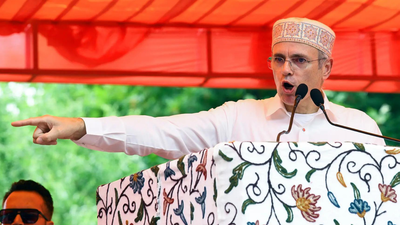
Addressing party workers and media representatives, Abdullah asserted that the people of Jammu and Kashmir have shown restraint and faith in the democratic process, but their expectations cannot be ignored indefinitely. “Do not mistake our patience for weakness,” he said, emphasizing that the demand for statehood is both legitimate and urgent.
The former Chief Minister pointed out that the Centre had previously assured the restoration of statehood at an appropriate time following the abrogation of Article 370 in 2019. However, with years having passed and no concrete timeline announced, regional political leaders have increasingly voiced concerns over the delay.
Abdullah stressed that the absence of statehood has limited the political agency of the people, as key decisions continue to be administered by the Centre. He argued that restoring full statehood would strengthen democratic institutions, improve governance, and rebuild public trust in the system.
Several other regional leaders have echoed similar sentiments, calling for early assembly elections and the return of legislative powers to elected representatives. Political observers believe that the issue is likely to gain momentum in the coming months, especially as national elections approach.
Meanwhile, the Centre has maintained that the situation in Jammu and Kashmir is gradually normalizing, citing improvements in security and development indicators. Officials have reiterated that statehood will be restored at an appropriate time, though no specific roadmap has been disclosed.
As the political discourse intensifies, Abdullah’s remarks underline a growing impatience among regional stakeholders. The call for restoring statehood remains a central issue in Jammu and Kashmir’s evolving political landscape, with significant implications for governance and democratic representation in the region.