
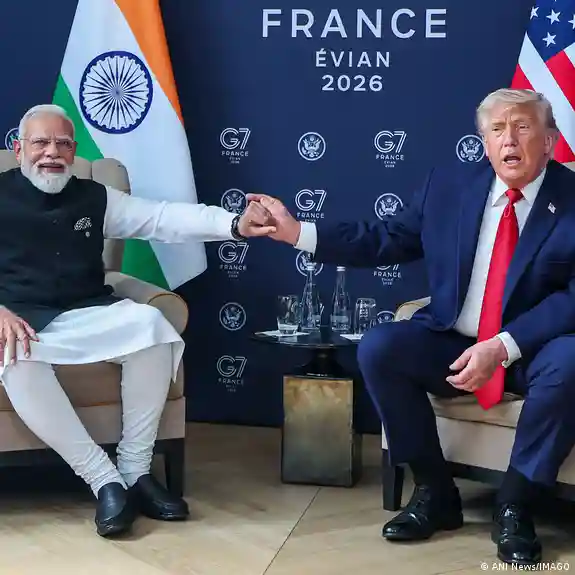
Source dw
WASHINGTON — Legislation enabling the White House to slap punitive tariffs of up to 100% on major importers of Russian energy—including India—cleared a crucial hurdle in the US House of Representatives, setting the stage for heightened diplomatic and trade friction.
The measure, titled the Lindsey O. Graham Sanctioning Russia and Iran Act of 2026, navigated a razor-thin 214–211 procedural vote on Tuesday after two Democrats broke party ranks to side with the Republican majority. The US Senate had previously approved the bill with an overwhelming 86–11 majority, reflecting growing bipartisan resolve on Capitol Hill to choke off Moscow’s remaining energy revenues.
Target on Energy Buyers
The core mechanism of the bill targets Moscow’s wartime economy by cracking down on the Kremlin’s “shadow fleet” and empowering President Donald Trump to impose retaliatory import duties on the top purchasers of Russian oil and gas.
While the Senate’s original draft broadly covered the five largest global consumers by volume, House amendments directly singled out key nations, including India, China, and several Eurasian trading partners. If signed into law, the legislation will not automatically enforce tariffs, but it provides the executive branch discretionary authority to levy tariffs up to 100% on goods originating from countries that bypass secondary sanctions.
Friction on the Hill
The bill has sparked sharp debate inside Washington:
Supporters contend that secondary sanctions are the only remaining economic lever potent enough to cripple Russia’s state budget and force concessions in the war against Ukraine.
Opponents, including ranking House Foreign Affairs Committee Democrat Gregory Meeks, voiced caution over granting the Oval Office sweeping, unilateral tariff powers that could roil global markets and trigger reciprocal trade fallout.
New Delhi’s Balancing Act
Since 2022, Indian refiners have imported discounted Russian crude at scale, insulating domestic consumers from global price spikes while refining petroleum products for global export.
New Delhi has consistently defended the purchases as a matter of national energy security and fiscal pragmatism, maintaining that its diversified supply chain stabilizes the wider international oil market. However, should the bill pass a final floor vote and be signed by the president, Washington will hold a major economic cudgel capable of impacting billions of dollars in Indian exports bound for American ports.









