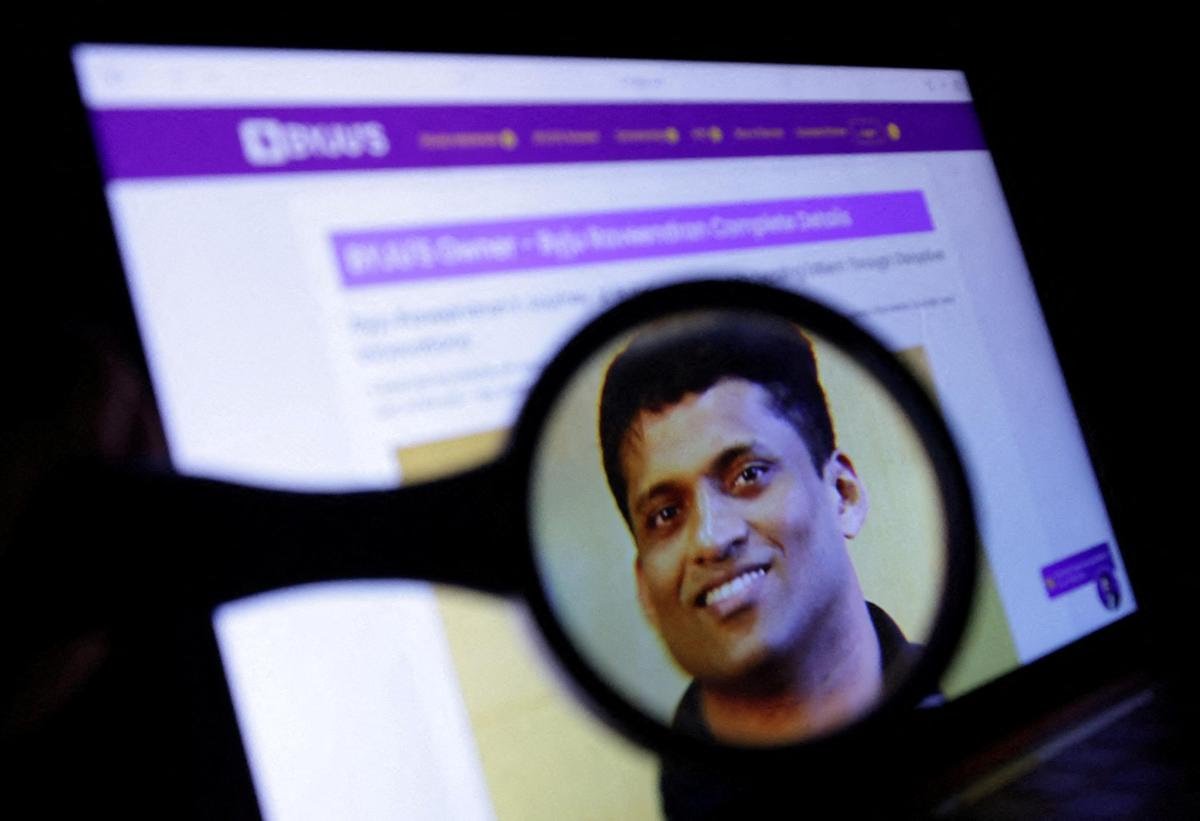
Source The Hindu
SINGAPORE — Byju Raveendran, the founder of the embattled Indian education technology giant Byju’s, has been sentenced to six months in prison by a Singapore court for contempt of court.
The ruling marks a significant escalation in the personal legal liabilities facing the entrepreneur, whose company has collapsed from its peak valuation of $22 billion into insolvency.
The Contempt Order and Asset Disclosures
According to court details, the Singapore court found Raveendran guilty of repeatedly violating multiple judicial orders dating back to April 2024. These orders were tied to the mandatory disclosure and verification of his personal and corporate assets.
The court has directed Raveendran to:
Surrender to authorities to begin serving his six-month term.
Pay legal costs amounting to S$90,000 (approximately $70,500).
Produce documentation establishing his clear ownership of Beeaar Investco Pte, a corporate entity holding shares in a related firm.
The legal action in Singapore was spearheaded by a subsidiary of the sovereign wealth fund Qatar Investment Authority (QIA). QIA had heavily backed the firm during its late-stage funding rounds, just as the startup began unraveling due to aggressive cost-cutting and mass layoffs.
Global Financial Battles
The Singapore ruling adds to a complex, multi-jurisdictional legal web surrounding Raveendran.
Raveendran Rejects “Misleading Narrative”
Following the court’s decision, Raveendran issued a public statement strongly denying any intentional wrongdoing and characterizing the situation as an unnecessary escalation by investors. He framed the ruling as a “procedural contempt of court order” over missing documentation rather than a finding of fraud or dishonesty.
“The recent Singapore court matter has been pursued and reported in a manner that creates a misleading impression about me, especially at a time when all key parties have almost concluded settlement discussions,” Raveendran stated.
The founder alleged that the major stakeholders—including US-based GLAS Trust and QIA—had already agreed to a settlement in principle, with only minor residual issues left to resolve. He claimed that the parties had informally agreed to a standstill on active litigation over the last three months, making QIA’s push for the contempt ruling an “unnecessary pressure tactic.”
Raveendran maintained that he has acted in good faith, reiterating that neither he nor his co-founders personally pocketed any of the disputed funds. He confirmed his team intends to appeal the decision. It remains unclear whether Raveendran is currently inside Singapore’s jurisdiction to face the surrender order.