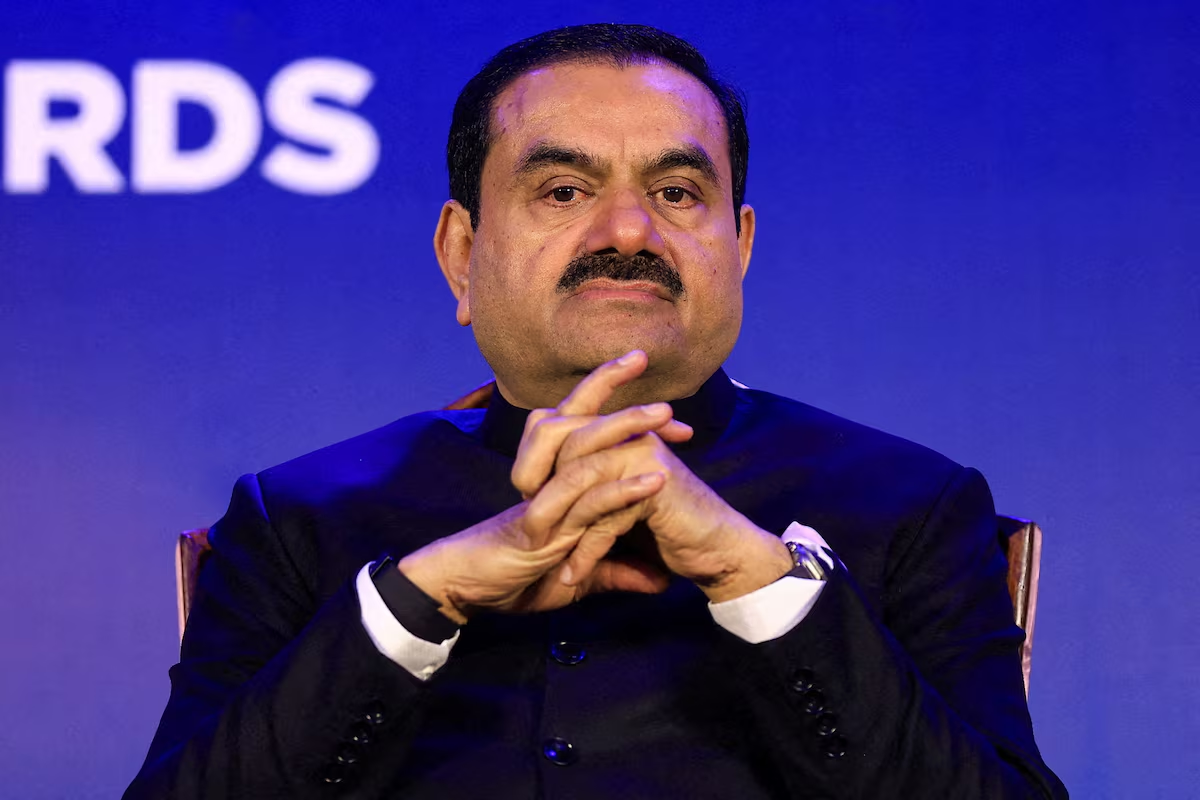
Source Reuter
NEW DELHI — Billionaire Gautam Adani’s ports-to-energy conglomerate is weighing a foray into the airline business, a potential strategic shift that could disrupt India’s domestic aviation sector.
Internal discussions remain at an early stage, but the group is considering both launching a standalone carrier and acquiring a stake in an existing airline. The move comes amidst reports that the Indian government has privately encouraged major corporate houses to consider establishing new carriers to inject fresh competition into a market dominated by two players.
Breaking the Duopoly
India’s domestic air travel market has increasingly consolidated into a duopoly:
IndiGo: Commands roughly 65.4% of domestic passenger traffic.
Air India Group: Controls approximately 25% following its consolidation of Vistara and AirAsia India.
Together, the two giants control nearly 90% of the country’s domestic flying capacity.
Government concerns over market concentration intensified following significant flight cancellations by IndiGo during peak travel periods, as well as heightened scrutiny surrounding Air India’s operational challenges. Policymakers view a potential third major player as vital to managing capacity and stabilizing airfares in one of the world’s fastest-growing travel markets.
Policy Barriers & Strategic Pivot
For the Adani Group—which operates eight airports across India, including Mumbai International Airport—an entry into airline operations would represent a dramatic strategy shift.
“Our comfort and our core competency is in creating hard assets on the ground… running them quite efficiently.”
— Jeet Adani, Director of Adani Airports (December)
Beyond operational strategy, regulatory hurdles remain:
Current Provision.
10% Ownership Cap: Existing 2006 privatization rules restrict airport operators from holding more than a 10% stake in scheduled airlines. Potential Policy Change Rule Relaxation: The Ministry of Civil Aviation is reportedly evaluating proposals to relax ownership limits to encourage airport operators to launch carriers.
High Stakes in Turbulent Skies
While an Adani-backed airline would benefit from direct integration with airport infrastructure, the Indian airline industry has historically posed severe financial risks. Over the past 15 years, high jet-fuel taxation, aggressive fare wars, and global supply chain disruptions have driven established carriers—including Kingfisher Airlines, Jet Airways, and Go First—into insolvency.
Furthermore, industry analysts point out that airport operators running their own airlines could raise competition concerns regarding slot allocations and ground handling privileges over rival carriers.
No final decision has been taken, and internal evaluations are ongoing as the conglomerate weighs high entry risks against potential national interest and infrastructure synergies.