
Source The eurasian time
In an era marked by rising global tensions and rapid military modernization, the United States Air Force (USAF) continues to assert unmatched aerial superiority. At the center of this dominance is a fleet of advanced aircraft that combine stealth, speed, precision, and cutting-edge technology—capabilities that analysts say outclass even a hypothetical “combined fleet” of rival powers like China and Russia.
Among the most formidable assets in the USAF’s arsenal is the F-22 Raptor. Known for its stealth capabilities and supercruise ability, the F-22 remains one of the most advanced air superiority fighters in the world. It is designed to penetrate heavily defended airspace and establish dominance before adversaries can respond.
Complementing the F-22 is the F-35 Lightning II, a multirole stealth fighter that integrates advanced sensors and data-sharing capabilities. The F-35 acts as a force multiplier, enabling seamless coordination across air, land, and sea units, making it a cornerstone of modern U.S. military strategy.
Another key component is the B-2 Spirit, a long-range stealth bomber capable of delivering both conventional and nuclear payloads. Its ability to evade sophisticated air defense systems allows it to strike high-value targets deep within enemy territory.
Looking to the future, the USAF is developing the B-21 Raider, expected to further enhance America’s strategic reach and survivability. With improved stealth, connectivity, and payload capabilities, the B-21 is poised to redefine long-range strike missions.
Defense experts note that while nations like China and Russia have made significant advancements in their own air forces, including fifth-generation fighters and integrated defense systems, the U.S. maintains a decisive edge through combat experience, global reach, and a highly networked warfare ecosystem.
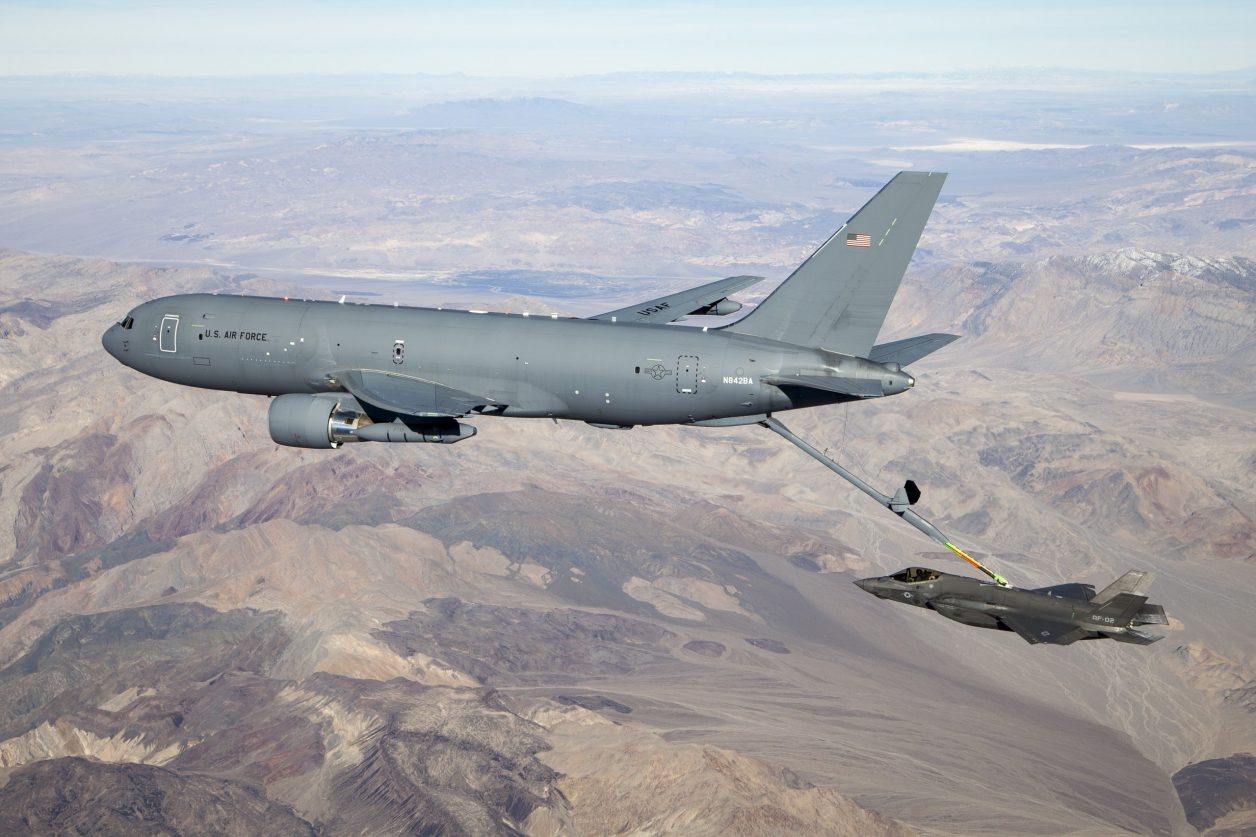
Beyond individual aircraft, the USAF’s strength lies in its ability to integrate these platforms into a unified command structure supported by satellites, surveillance systems, and mid-air refueling capabilities. This interconnected approach ensures rapid response and sustained operations anywhere in the world.
As geopolitical competition intensifies, the United States continues to invest heavily in next-generation technologies, including artificial intelligence, unmanned systems, and hypersonic weapons. For now, its advanced aircraft fleet remains a key pillar of its unrivaled air power—setting a benchmark that rivals are still striving to match.









