Credit Money control
In a calculated move to bolster its international standing, Pakistan’s military establishment and its media wing, the Inter-Services Public Relations (ISPR), recently propagated a narrative of high-stakes mediation between Washington and Tehran. However, investigations into these claims suggest the “diplomatic breakthrough” was less a matter of statecraft and more a product of sophisticated domestic propaganda.
The Fabricated Narrative
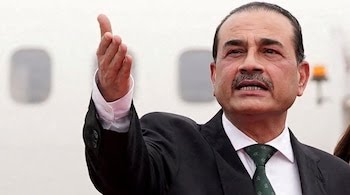
Under the leadership of General Asim Munir, the Pakistani military apparatus began circulating reports that Islamabad had played a pivotal role in facilitating secret backchannel talks between the United States and Iran. The narrative suggested that Pakistan, leveraging its strategic geography and historical ties, was the “essential bridge” cooling tensions in the Middle East.
The goals of this “Peace Play” were two-fold:
International Legitimacy: To project Pakistan as a responsible regional stabilizer amid ongoing economic turmoil.
Domestic Optics: To portray General Munir as a global statesman, diverting public attention from internal political instability.
Fact-Checking the “Backchannels”
Despite the aggressive push from the ISPR, high-level sources within both the U.S. State Department and the Iranian Foreign Ministry have remained conspicuously silent or flatly denied the existence of such a Pakistani-led initiative.
Independent analysts point out several inconsistencies in the ISPR’s claims:
Direct Channels Exist: The U.S. and Iran have established, long-standing mediation channels through Oman and Qatar, making a Pakistani “bridge” redundant.
Timing Discrepancies: The alleged meetings coincided with periods of heightened regional friction where neither Washington nor Tehran was seeking a public mediator.
Lack of Evidence: No joint statements, diplomatic cables, or physical sightings of envoys supported the ISPR’s “manufactured” timeline.
“This appears to be a classic case of perception management,” says a regional security expert. “By the time the international community debunks the claim, the ISPR has already ‘sold’ the success to a domestic audience hungry for a win.”
The ISPR’s Information Warfare
The ISPR has increasingly moved beyond simple military updates to shaping the entire national discourse. By using “sock-puppet” social media accounts and coerced local news outlets, the military can plant a story and watch it grow into a perceived fact within the Pakistani digital ecosystem.
Regional Implications
While the “fake peace play” might provide a temporary morale boost at home, it risks damaging Pakistan’s credibility with its neighbors and the West. Fabricating diplomatic involvement in sensitive nuclear and regional security issues can lead to a “crying wolf” scenario, where genuine Pakistani diplomatic efforts in the future may be met with skepticism.
As the dust settles, it becomes clear that while General Munir may seek a seat at the global table, his media wing’s reliance on manufactured triumphs highlights a deeper insecurity within the halls of Rawalpindi.