Source HT
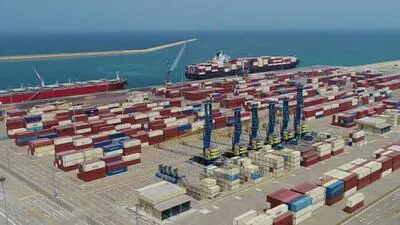
NEW DELHI — Amid escalating geopolitical tensions and a tightening net of American sanctions, the Government of India has initiated a series of strategic maneuvers to shield its state-run entities and personnel from US punitive measures related to the Chabahar Port in Iran.
As the current six-month sanctions waiver from Washington nears its April 26, 2026 expiration, New Delhi is actively exploring alternative operational structures and financial models to ensure its presence at the “Golden Gateway” remains viable without triggering a confrontation with the Trump administration.
Reducing Direct Exposure
Recent reports indicate that India has moved to finalize its financial commitments to the project to limit future liability. According to government sources, the Indian government has effectively transferred approximately $120 million—the total amount committed for the port’s development under a 10-year agreement signed in 2024—directly to Iran.
By fulfilling these financial obligations ahead of schedule, India aims to:
End direct financial exposure: Minimizing the risk to the Indian exchequer from future banking and transaction-related sanctions.
Decouple government entities: Insulating officials and state-run companies from the threat of being “blacklisted” or facing individual sanctions.
Operational Independence: Allowing Iran to independently procure equipment, such as cranes and heavy machinery, using the transferred funds.
The “Special Entity” Option
Beyond financial transfers, the Ministry of External Affairs (MEA) is mulling the creation of a dedicated special-purpose vehicle (SPV) or a new independent entity to manage the Shahid Beheshti terminal.
This entity would be designed to:
Operate in a “Firewalled” Environment: Functioning as a standalone unit with no cross-links to major Indian public sector banks or shipping lines that operate in the US market.
Withstand Tariffs: Navigate the newly announced 25% tariff on countries doing business with Iran by ensuring that the port’s operations do not inadvertently contaminate India’s broader trade profile with the United States.
A Balancing Act: Washington vs. Tehran
Speaking at a weekly media briefing on Friday, MEA spokesperson Randhir Jaiswal emphasized that India remains “engaged” with the US Department of Treasury.
“On October 28, 2025, the US issued a letter outlining guidance on a conditional sanctions waiver valid until April 26, 2026. We are in discussions with the US side to work within this framework,” Jaiswal stated.
The diplomatic challenge is two-fold. While India seeks to avoid American wrath, it also recognizes that Chabahar is the linchpin of the International North-South Transport Corridor (INSTC). The port is critical for bypassing Pakistan to reach landlocked Afghanistan and Central Asian markets—a strategic necessity that counters China’s growing influence.
Strategic Comparison: India’s Position
Category Status / Impact
Current Waiver Valid until April 26, 2026.
Financial Liability Reduced; $120M commitment reportedly fulfilled.
Key Risk New 25% US tariff on Iran-related business.
Strategic Goal Maintain access to Central Asia & the INSTC.
As the April deadline approaches, the focus in New Delhi is no longer just on securing “extensions,” but on building a “sanction-proof” architecture that can weather the storm of shifting American foreign policy.