Source Live law
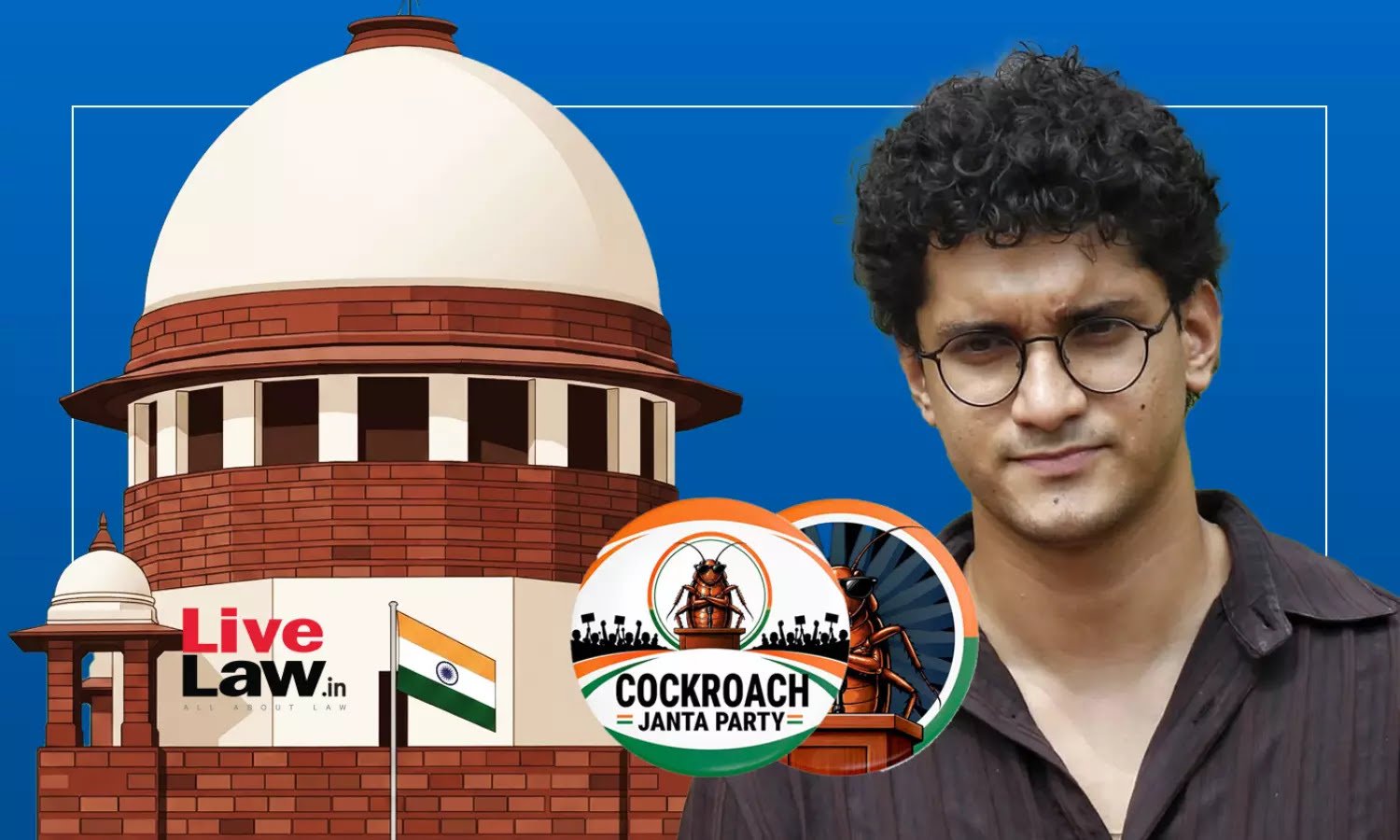
New Delhi: In a major development, the Cockroach Janta Party (CJP) has called off its proposed September 5 protest march following the Supreme Court’s decision to quash multiple FIRs registered against young protesters. The march, which was scheduled to proceed from India Gate to the New Delhi Police Headquarters, was aimed at protesting the government’s alleged failure to honor previous commitments regarding the NEET examination protests.
CJP co-convener Saurav Das appeared in person before the Supreme Court on Tuesday to announce the withdrawal of the protest. Das stated that the decision was taken in light of positive assurances given by the Central Government and the judicial sanctity attached to them by the court.
A Supreme Court bench headed by Chief Justice of India Surya Kant, and comprising Justices Joymalya Bagchi and V. Mohana, invoked its extraordinary powers under Article 142 of the Constitution to close the criminal proceedings. Citing the “future prospects of the young protesters,” the bench quashed FIRs registered in Delhi, Bihar, Maharashtra, West Bengal, and Assam. The top court also directed that similar cases in other states and Union Territories should not be pursued.
Appearing for the Centre, Solicitor General Tushar Mehta assured the court that the government would honor its commitments, which include not pursuing the existing FIRs and providing compensation to the families of students who tragically died by suicide over academic concerns. Mehta requested approximately three months to finalize the compensation scheme in consultation with state governments.
While the court offered sweeping relief to student protesters, it allowed the Delhi Police to register a single, fresh FIR against 2,873 individuals with serious criminal records who participated in the July protests. However, prosecution against these individuals will be strictly limited to allegations involving bodily harm or damage to property.
The Chief Justice appreciated the CJP’s decision to withdraw the march, observing that any dispute can be resolved if both sides act in good faith and with an open mind.