Source Live law
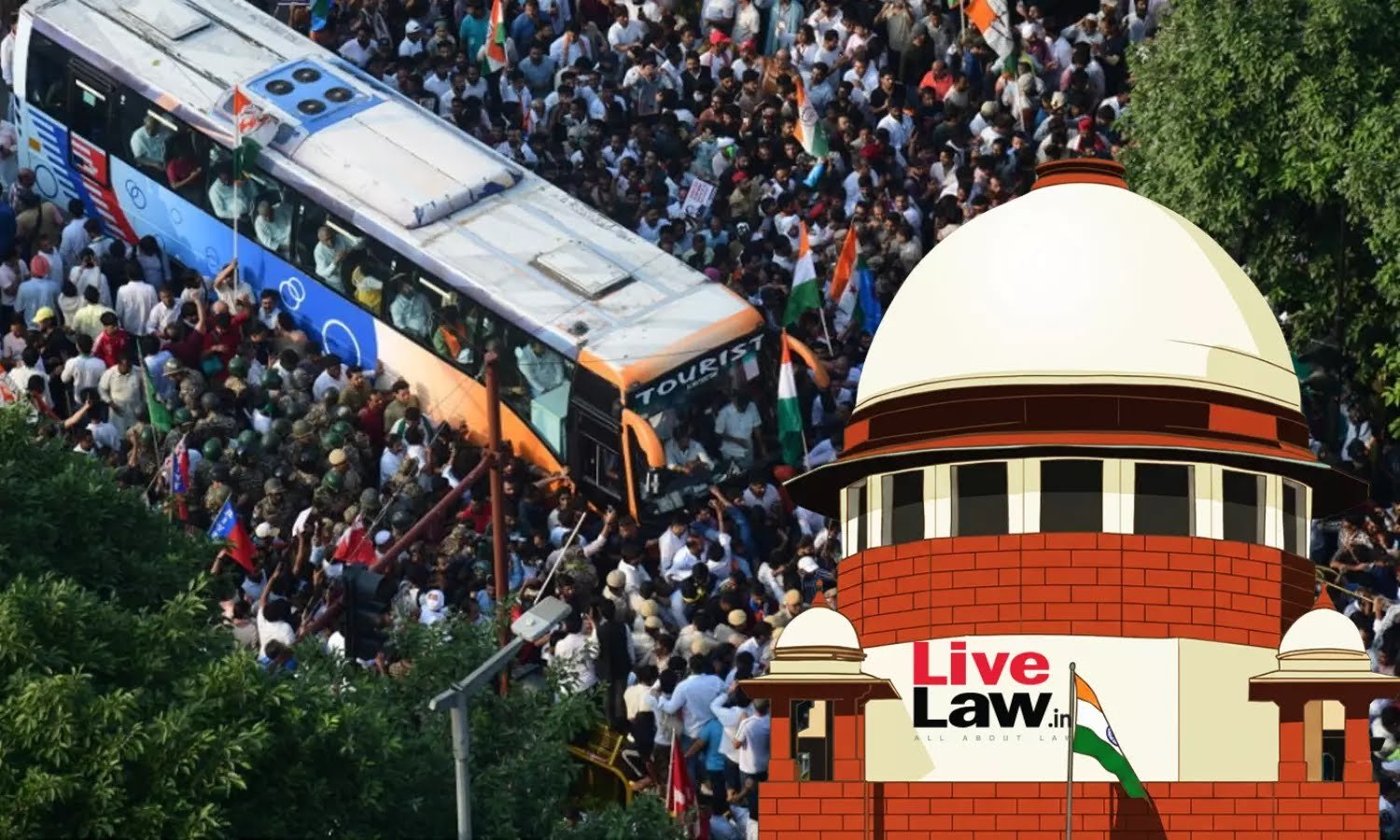
The Supreme Court of India has made a strong statement while hearing a plea linked to the October 12 march planned by opposition leaders. The court said that nobody could pressure or intimidate it while carrying out its duties. It also issued a notice in the matter, marking an important step in the legal process.
The remarks have drawn attention to the role of the judiciary and the importance of allowing courts to work without outside pressure.
Supreme Court Stands Firm Against Pressure
During the hearing, the Supreme Court made it clear that it would not be influenced by attempts to intimidate it. The statement, “Nobody can browbeat us,” reflected the court’s position that it must be allowed to perform its duties independently.
The judiciary plays a key role in protecting the Constitution and ensuring that the law applies equally to everyone. The court’s remarks underlined the need to maintain its independence, especially in matters involving political leaders and public demonstrations.
Court Issues Notice on the Plea
The Supreme Court also issued a notice in response to the plea related to the October 12 march by opposition leaders. A notice generally means that the court has asked the concerned parties to respond to the issues raised in the petition.
However, issuing a notice does not mean that the court has accepted all the claims made in the plea. The matter will move forward as the court considers the responses and examines the legal questions involved.
Further proceedings are expected to clarify the concerns raised by the petitioner and the position of the parties involved.
Opposition March Draws Legal Attention
The October 12 march by opposition leaders has become the focus of legal attention following the petition. Political marches and protests are often used by parties to raise concerns, express disagreement and draw public attention to important issues.
At the same time, such events can lead to legal questions when concerns are raised about the rules governing public demonstrations or the actions of those involved.
The exact issues raised in the petition and the arguments made by the parties will be important in understanding the next steps in the case.
Why the Court’s Remarks Matter
The Supreme Court’s statement carries significance because judicial independence is an important part of India’s democratic system. Courts are expected to make decisions based on the law and the facts of each case, without fear or pressure from any individual or group.
The court’s remarks also serve as a reminder that legal proceedings must be allowed to continue through established rules and procedures.
What Happens Next?
With the notice issued, the concerned parties may be required to submit their responses before the court. The next hearing and the arguments presented by both sides will help determine how the matter proceeds.
For now, the Supreme Court’s strong words have brought the case into focus. The final outcome will depend on the legal arguments, the available facts and the court’s assessment of the issues raised in the petition.