
Source News 18
ISLAMABAD – Diplomatic efforts to prevent a return to full-scale war reached a critical bottleneck on Tuesday as Iranian officials flatly rejected entering new negotiations under what they termed the “shadow of threats.” With a fragile two-week ceasefire set to expire on Wednesday, Tehran warned it is prepared to unveil “new cards” on the battlefield if the United States continues its policy of military and economic coercion.
The hardening of Iran’s stance follows a series of conflicting signals from Washington. While U.S. President Donald Trump indicated that his team—led by Vice President JD Vance—is prepared to travel to Islamabad for high-level talks, he simultaneously accused Tehran of multiple ceasefire violations and vowed to maintain a rigorous naval blockade in the Strait of Hormuz.
“The Table of Surrender”
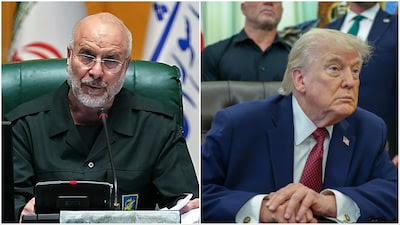
In a pointed statement on X, Iranian Parliament Speaker Mohammad Bagher Ghalibaf accused the U.S. administration of attempting to use diplomacy as a tool for subjugation.
“Trump, by imposing a siege and violating the ceasefire, seeks to turn this negotiating table into a table of surrender,” Ghalibaf stated. “We do not accept negotiations under the shadow of threats, and in the past two weeks, we have prepared to reveal new cards on the battlefield.”
The “new cards” rhetoric is widely interpreted by regional analysts as a signal of advanced military capabilities or asymmetric tactics—potentially involving Iran’s drone technology, “shadow fleet” maneuvers, or a formal closure of the Strait of Hormuz, which Tehran recently declared “closed until further notice” following a U.S. naval operation.
The Shipping Crisis
Tensions spiked over the weekend following the U.S. seizure of the Touska, a container vessel Tehran claims was engaged in civilian commerce. The Iranian Foreign Ministry denounced the seizure as a “clear violation” of the standing truce, while U.S. Central Command maintained the vessel was operating in defiance of international sanctions.
Iranian Foreign Minister Seyed Abbas Araghchi, in calls with his Pakistani and Russian counterparts, emphasized that Iran’s participation in the Islamabad summit remains undecided. He noted that diplomacy cannot proceed while the U.S. employs “provocative actions” against Iranian shipping.
Pakistan’s Mediatory Role
As the host of the proposed talks, Pakistan has spent the last 48 hours in a flurry of diplomatic activity. Information Minister Attaullah Tarar confirmed that Islamabad has made all necessary arrangements for the summit, yet formal confirmation from the Iranian delegation is still pending.
Key Points of Contention:
The Deadline: The current ceasefire is scheduled to expire on Wednesday, April 22.
The Blockade: Iran demands an end to the U.S. “siege” of its waters.
Nuclear Redlines: U.S. demands for the total dismantling of Iran’s enrichment program remain a non-starter for Tehran.
With only hours remaining before the ceasefire deadline, the international community remains on edge. Should the Islamabad talks fail to materialize, military analysts warn that the “2026 Iran War” could enter a significantly more destructive phase, drawing in regional powers and further destabilizing global energy markets.









