Source Press Tv
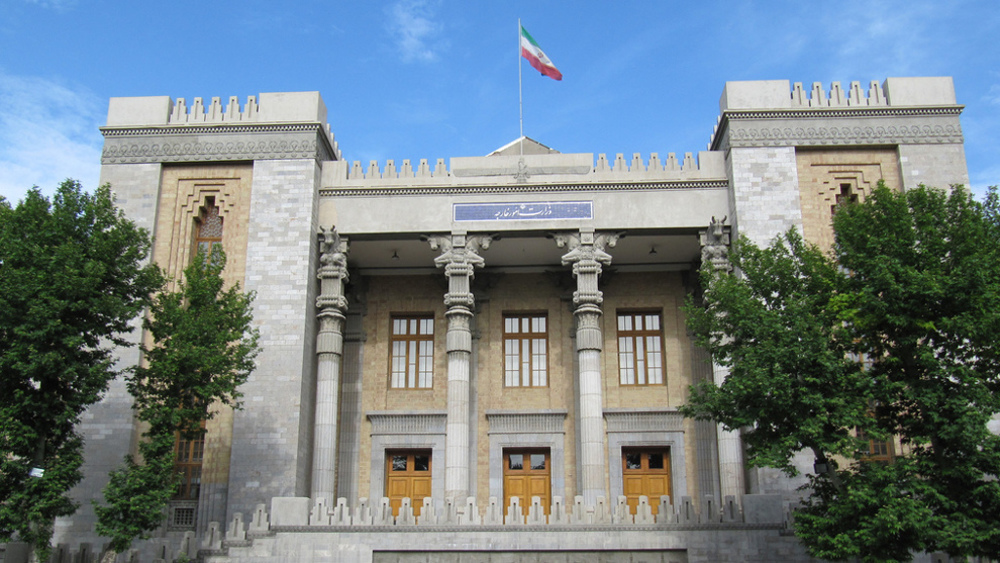
TEHRAN — The Iranian Foreign Ministry on Friday fiercely criticized a joint statement issued by the United States and the Gulf Cooperation Council (GCC), describing the diplomatic communique as “interventionist, irresponsible, and provocative.”
The backlash follows a high-level US-GCC ministerial summit held in Manama, Bahrain, co-chaired by US Secretary of State Marco Rubio and Bahraini Foreign Minister Abdullatif bin Rashid Al Zayani. In their joint declaration, Washington and Gulf Arab leaders called for stricter curbs on Tehran’s ballistic missile and drone programs, expressed concern over its nuclear ambitions, and demanded unhindered shipping access through the vital Strait of Hormuz.
Tehran, however, wastefully dismissed the Western-Arab alliance’s rhetoric, warning against what it characterized as continued “belligerent and hostile behavior” in the Middle East.
Rejecting Foreign Military Presence
In an official statement carried by state media, Iran’s Foreign Ministry strongly rejected Washington’s long-standing declarations of an “enduring commitment” to Gulf security, calling it a total distortion of reality. Instead, Tehran argued that American military assets in the region act as a direct catalyst for friction.
“The use of military bases in the countries of the region has clearly demonstrated America’s disregard for the security of the region’s countries and their mutual relations,” the ministry statement read, framing the US military presence as an expensive burden on local populations that fuels regional division.
The ministry further pressed its neighbors, explicitly urging Gulf Arab nations to reconsider allowing Western or foreign powers to operate from their soil. Citing principles of international law and “good neighborliness,” Tehran insisted that regional states are legally obligated to block third parties from leveraging local facilities to stage hostile actions or surveillance operations targeting Iranian territory.
Disagreement Over the Nuclear and Proxy Framework
The US-GCC statement did recognize and welcome the recent June 17 Memorandum of Understanding (MoU) meant to ease broader regional hostilities, but stressed that any future trade or investment with Iran remains strictly “conditional and reversible” based on Tehran’s full compliance and abandonment of “destabilizing behavior.”
Iran firmly pushed back on these terms, asserting that its nuclear program remains entirely peaceful and accusing the US and Israel of propagating “fabricated lies” to justify an ongoing “Iranophobia” campaign. Tehran countered by proposing that the GCC collaborate directly with Iran to establish a verified “nuclear-weapons-free zone” across West Asia, entirely independent of Western oversight.
Furthermore, Iran rejected the communique’s categorization of Lebanese and Palestinian armed factions as “Iranian proxies,” retorting that the label better fits external actors operating in the region.
The Battle for Strategic Waterways
The dispute arrives amid highly heightened tensions regarding maritime security. The US-GCC alliance explicitly demanded that the strategic Strait of Hormuz remain completely free, unconditional, and unrestricted for global transit, rejecting any unilateral attempts by Tehran to implement passage fees or tolls.
In response, Tehran reiterated that the management of the Strait of Hormuz falls under the direct sovereign jurisdiction of Iran and Oman. It maintained that maritime stability is best safeguarded exclusively by local littoral states, rather than through the deployment of foreign naval task forces.