
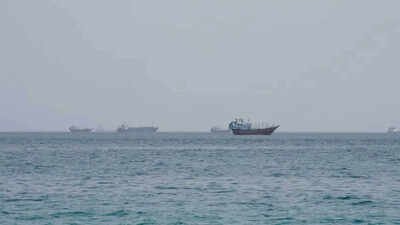
Source TOI
Iran is reportedly reshaping its military approach in the Strait of Hormuz, adopting faster and more covert methods to target commercial and military vessels, a move that could significantly escalate tensions in one of the world’s most critical النفط transit corridors.
According to recent reports, Tehran’s updated strategy focuses on speed, stealth, and flexibility—particularly in the deployment of naval mines and small attack units. These changes are designed to reduce detection risks while increasing the efficiency with which Iranian forces can disrupt shipping lanes.
A Shift Toward Faster, Harder-to-Detect Tactics
Analysts say Iran is moving away from slower, more conventional naval operations toward agile tactics involving small, fast boats, drones, and covert mine-laying systems. The use of such methods allows Iranian forces to act quickly and withdraw before countermeasures can be deployed.
The geography of the Strait of Hormuz—narrow and close to Iran’s coastline—gives Tehran a strategic advantage. Its forces can rapidly deploy assets such as fast attack craft and short-range missile systems, enabling quick strikes on passing vessels.
In addition, Iran has long invested in “asymmetric warfare” capabilities, including swarming tactics using small boats and the strategic placement of naval mines. These tools are intended to overwhelm larger, conventional naval forces and create uncertainty for global shipping operators.
Escalating Regional Tensions
The shift in strategy comes amid heightened tensions between Iran, the United States, and its allies. Recent months have seen repeated exchanges of fire, military deployments, and threats to restrict maritime traffic through the strait.
There have also been incidents involving missile and drone strikes, as well as attempts to rebuild radar and missile infrastructure near the waterway—further increasing the risk of confrontation.
Shipping traffic has already been affected, with fewer vessels willing to transit the area due to safety concerns and rising insurance costs. The Strait of Hormuz is a vital chokepoint through which a significant portion of the world’s oil supply passes, making any disruption a global economic concern.
Global Implications
Experts warn that Iran’s evolving tactics could make it more difficult for international forces to secure the strait. Faster deployment methods and decentralized attack strategies reduce response time for naval patrols and complicate mine-clearing operations.
If tensions continue to rise, the risk of broader conflict remains high. Any sustained disruption in the Strait of Hormuz could trigger spikes in global energy prices and disrupt international trade flows.
As the situation unfolds, global powers are closely monitoring Iran’s next moves, with diplomatic efforts continuing alongside military preparedness to prevent further escalation in the region.









