
Source money control
TEHRAN — Iran’s Islamic Revolutionary Guard Corps (IRGC) Navy fired warning shots at four commercial vessels attempting to traverse the southern corridor of the Strait of Hormuz, forcing them to alter course.
According to a statement broadcast by Iranian state television, the maritime military wing intercepted the ships over a 24-hour period after they allegedly entered what Tehran deems an “illegal and unsafe route” hugging the Omani coast. The confrontation marks a sharp escalation in the strategic waterway—a key maritime chokepoint through which roughly a fifth of the world’s petroleum passes.
Escalation in Strategic Waterways
The IRGC Navy stated that the four merchant ships attempted to navigate the contested southern maritime shipping lanes without authorization from Iranian coastal authorities.
“Four vessels that had intended to transit through the southern area of the Strait of Hormuz via an illegal and unsafe route were stopped over the past 24 hours after warning shots were fired by the IRGC Navy,” state television reported, citing the military command. “The ships subsequently altered course.”
Iranian officials warned that any vessel attempting to utilize unauthorized routes or bypass regional maritime regulations will face a “forceful response.” In recent weeks, Iranian naval units have repeatedly targeted commercial tankers operating near the Omani coast, in what maritime security analysts describe as a coordinated push to force international shipping into northern corridors controlled directly by Tehran.
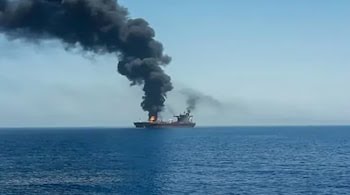
The incident follows weeks of heightened military posture across the Persian Gulf and Gulf of Oman. Simultaneously, United States Central Command (CENTCOM) reported that American forces disabled a merchant vessel, the Comoros-flagged M/T Lavine, in the Gulf of Oman after it repeatedly attempted to breach a U.S.-enforced blockade of Iranian ports. U.S. Navy personnel fired directly into the vessel’s engine room after the crew ignored multiple verbal warnings to halt.
Global Shipping and Economic Fallout
The Strait of Hormuz serves as the vital artery connecting Middle Eastern energy producers to global markets in Europe, Asia, and North America. The latest military standoffs have significantly disrupted commercial maritime operations, causing oil prices to fluctuate erratically and insurance premiums for transit through the Persian Gulf to spike.
Data from maritime intelligence firm Kpler indicates that commercial traffic through the strait has dropped sharply, with only a handful of merchant vessels attempting passage daily—most choosing to comply with Iranian routing mandates to avoid confrontation.
Corridor / WaterwayCurrent Transit StatusPrimary Risk Factors
Hormuz Northern RouteRestricted / RegulatedIRGC Inspection & Toll Enforcement
Hormuz Southern RouteHigh Risk / ContestedLive Firing, Seizures, & Blockades
Bab el-Mandeb StraitConditional TransitHouthi Missile & Drone Strikes
The chokehold on Hormuz is compounded by regional spillover into the Bab el-Mandeb Strait at the southern mouth of the Red Sea, where Iran-aligned Houthi forces in Yemen have launched attacks against energy carriers. The dual-point pressure on Middle Eastern shipping lanes has forced major maritime carriers to consider costly rerouting around the Cape of Good Hope, adding up to two weeks to transit times between Asia and Europe.
Diplomatic Deadlock and Security Risks
International maritime organizations and Western governments have condemned the firing of live rounds against commercial traffic, calling the actions a violation of freedom of navigation under international law. Maritime security experts warn that firing warning shots in heavily congested sea lanes vastly increases the probability of miscalculation or collateral damage.
Key Takeaway: The friction in the Strait of Hormuz is no longer restricted to political maneuvering; live-fire operations against commercial vessels represent an active hazard to global energy supply security and merchant crew safety.
With diplomatic channels constrained and military assets deployed heavily throughout the region, shipping companies face mounting pressure to balance economic demands with safety risks. As long as warning shots continue to echo across the Persian Gulf, the stability of global energy transport remains precarious.









