
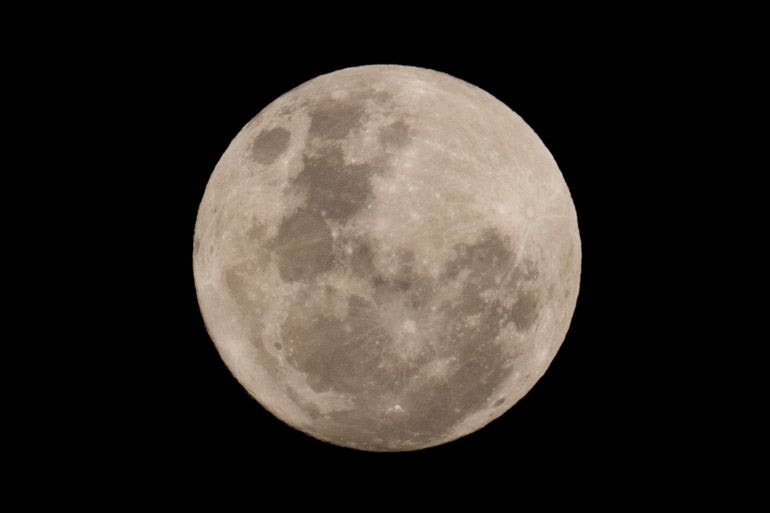
Source Aljajeera
BEIJING — China is preparing to launch Chang’e-7, an ambitious robotic expedition targeting the Moon’s rugged south pole. The multi-vehicle mission aims to settle one of modern planetary science’s most consequential questions: precisely where lunar water ice hides, how much is there, and whether future human explorers can extract it.
A Four-Part Armada
Unlike standard landers, Chang’e-7 deploys a four-tier architecture designed to survive extreme polar environments:
Orbiter: Maps polar terrain, radar profiles, and surface mineral composition from orbit.
Lander: Targets an illuminated ridge near Shackleton Crater with a sub-100-meter landing accuracy.
Rover: Traverses sunlit ridges to analyze shallow subsurface geology and volatiles with ground-penetrating radar.
Mini-Hopper: A rocket-propelled craft engineered to jump directly into Permanently Shadowed Regions (PSRs)—crater basins where temperatures plunge below -200°C—to sample and vaporize subsurface ice for real-time spectrometer analysis.
Why Lunar Water Ice Matters
Water ice trapped in polar cold traps represents far more than scientific curiosity; it is the cornerstone of long-term space exploration:
Rocket Fuel Production: Splitting lunar water into liquid hydrogen and liquid oxygen creates high-efficiency propellants on-site, transforming the Moon into a deep-space refueling depot for missions to Mars and beyond.
Life Support: Direct access to ice provides drinking water and breathable oxygen for sustained crewed habitats without costly resupply runs from Earth.
International Lunar Base Race: Data from Chang’e-7 directly lays the engineering foundation for China’s planned International Lunar Research Station (ILRS) in the 2030s, running parallel to NASA’s Artemis program.
Solar System History: Because these polar craters have remained frozen and dark for billions of years, ancient ice deposits hold pristine records of cometary bombardments and early Earth-Moon evolution.
Chang’e-7’s findings will help determine whether the Moon becomes a self-sustaining frontier or remains a distant outpost dependent on Earth.









