Source BBC
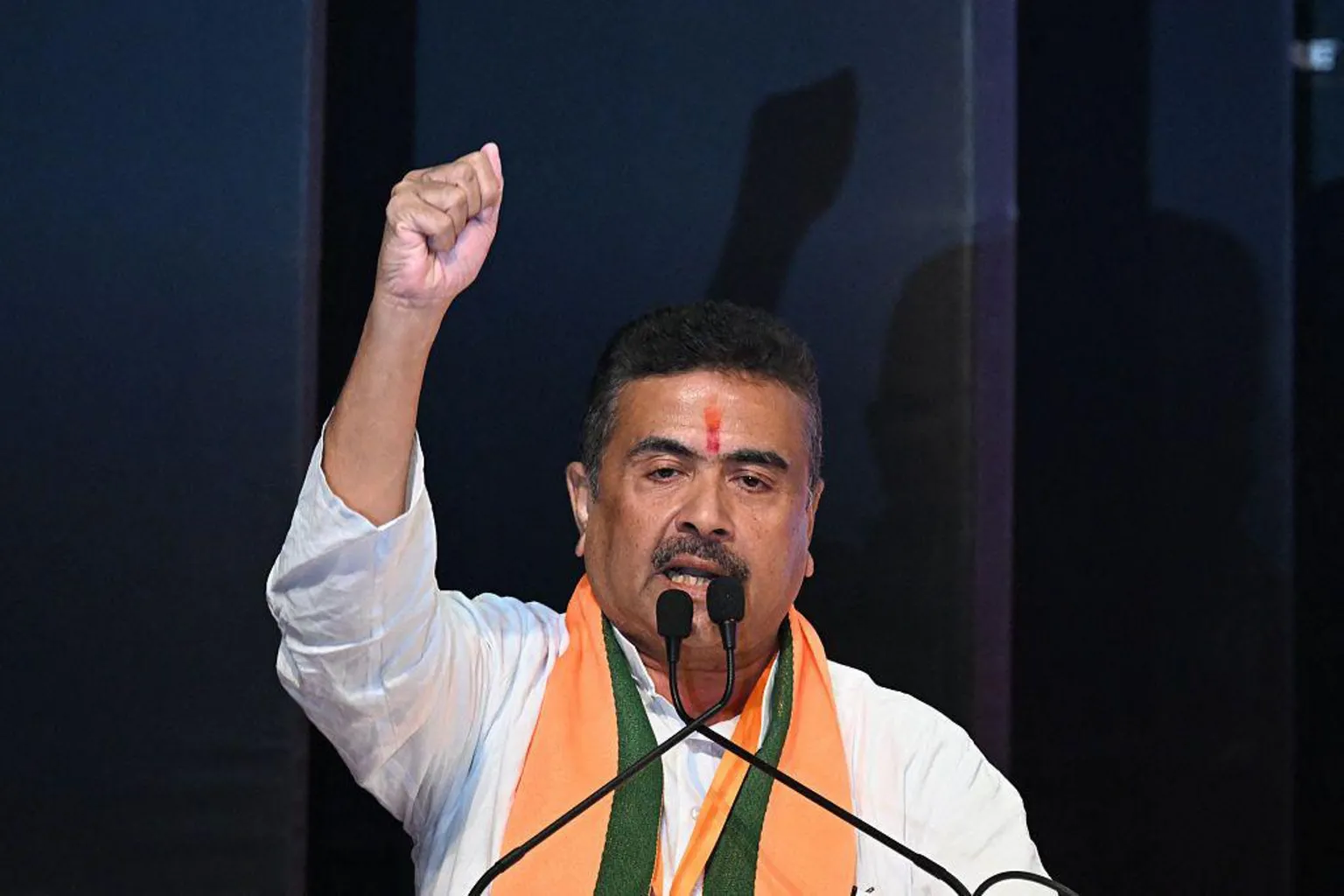
KOLKATA – In a political transformation that has reshaped the landscape of Eastern India, Suvendu Adhikari was sworn in today as the Chief Minister of West Bengal. The ceremony, held at Raj Bhavan, marks the culmination of a bitter, years-long rivalry between Adhikari and his former mentor, Mamata Banerjee.
Once the “architect of Nandigram” and a trusted lieutenant within the Trinamool Congress (TMC), Adhikari’s ascent to the state’s highest office represents a definitive shift in Bengal’s power dynamics.
From Protégé to Challenger
Adhikari’s journey to the Chief Minister’s office is defined by his dramatic exit from the TMC in late 2020. Having played a pivotal role in the 2007 anti-land acquisition movement that propelled Mamata Banerjee to power, Adhikari was long considered her natural successor.
However, citing the rise of “dynasty politics” and a perceived disconnect between the party leadership and the grassroots, Adhikari defected to the Bharatiya Janata Party (BJP). His personal victory over Banerjee in the Nandigram constituency during the previous assembly elections served as the foundational stone for his claim to leadership.
A Mandate for Change
The swearing-in follows a high-octane election cycle where the BJP leaned heavily on Adhikari’s deep-rooted organizational network in the Medinipur belt.
“This is not just a change of government; it is a restoration of democracy in Bengal,” Adhikari stated shortly after taking the oath. “Our priority is to replace ‘Pishi-Bhaipo’ (Aunt-Nephew) rule with ‘Asol Poriborton’ (Real Change) that focuses on industrialization and security.”
Key Priorities for the New Administration
The Adhikari-led cabinet is expected to move quickly on several fronts:
Economic Revival: Attracting heavy industry to the state to curb youth migration.
Central Schemes: Immediate implementation of national healthcare and housing schemes that were previously stalled by the state government.
Law and Order: Addressing allegations of political violence that have dogged the state for decades.
The Road Ahead
While Adhikari celebrates a historic victory, the path forward is fraught with challenges. He inherits a state with a complex fiscal deficit and a highly polarized electorate. Furthermore, as a leader who jumped ship from the very party he is now tasked with dismantling, Adhikari must prove to his skeptics that his governance style differs fundamentally from the predecessor he once served.
For Mamata Banerjee, now the face of the opposition, the focus shifts to rebuilding a fractured party. For West Bengal, a new chapter begins under the leadership of the man who once fought to put the TMC in power, only to eventually bring about its greatest defeat.