
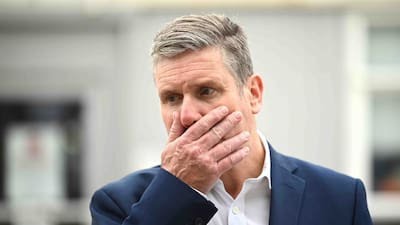
Source NDTV
LONDON — Just two years after leading the Labour Party to a staggering landslide victory that ended 14 years of Conservative rule, Prime Minister Keir Starmer stood outside 10 Downing Street on Monday and announced his resignation. His departure marks the end of a turbulent 20-month tenure, concluding a rapid fall from grace fueled by intra-party mutiny, severe economic headwinds, and a fundamental failure to define what he truly stood for.
“The question my party is asking now is whether I am best placed to lead us into the next general election,” an emotional Starmer said during his morning address. “I have heard the answer of my parliamentary party to that question. And I accept that answer with good grace.”
Starmer confirmed he will remain in office until a new Labour leader is selected in an election process set to begin in July.
From Landslide to Leadership Collapse
Starmer entered Downing Street in July 2024 promising a return to stolid competence, stability, and centrist policies designed to fix Britain’s crumbling public infrastructure. Yet, almost immediately, his government struggled to navigate a rapidly changing global and domestic political landscape.
The political reality shifted drastically following a disastrous set of local elections in May, where Labour lost over 1,100 council seats. The final blow came last week following a resounding by-election victory in Makerfield by Andy Burnham—the former Mayor of Greater Manchester who was immediately sworn in as an MP and is now the frontrunner to succeed Starmer.
“Six years ago, I inherited a Labour Party that was politically, financially and morally bankrupt,” Starmer argued in his defense, reminding the public of how he rebuilt the party following its catastrophic 2019 defeat under Jeremy Corbyn.
A Tenure Defined by Policy Shifts
Political analysts point out that Starmer’s defining political strength—his flexibility and cautious managerialism—ultimately became his fatal flaw. In opposition, his ideological fluidity allowed him to unite a fractured Labour party. In government, however, it left voters and his own MPs entirely unclear about his core convictions.
His short-lived administration was defined by a series of high-profile crises and U-turns:
The “Freebiesgate” Scandal: His first 100 days were instantly marred by revelations that he and senior cabinet members accepted thousands of pounds in luxury gifts and concert tickets, severely damaging his public image as a rules-bound leader.
Economic Stagnation & Inflation: Inheriting a massive national debt approaching 100% of GDP and record NHS waiting lists, Starmer’s economic measures faltered. By last autumn, inflation rebounded to 3.8%. A controversial early attempt to cut £5 billion from the welfare budget sparked an immediate backbench rebellion and forced a humiliating retreat.
The Mandelson Affair: His decision to appoint Peter Mandelson as the UK’s Ambassador to the United States triggered a months-long crisis when subsequent email leaks revealed Mandelson’s extensive ties to the late, disgraced financier Jeffrey Epstein.
Foreign Policy Friction: Starmer routinely found himself caught between conflicting factions, notably fracturing relations with Washington. Attempting to avoid the historical pitfalls of past Labour leaders, Starmer initially barred U.S. forces from using British bases to launch strikes in the Middle East before later softening his stance—a move critics cited as proof of chronic indecisiveness.
The Rise of a New Populism
Starmer’s rigid, managerial approach also left him ill-equipped to counter a new, highly polarized political environment. He found his slim parliamentary majorities squeezed tightly between Nigel Farage’s insurgent Reform UK party on the right and a resurgent Green Party capitalising on left-liberal frustration.
Even his final exit was unceremoniously preempted. A day before Starmer could take the podium at Downing Street, U.S. President Donald Trump took to social media to announce the prime minister’s impending departure, citing failures on immigration and energy policy.
As the Labour Party prepares for a summer leadership contest to find its seventh prime minister in a decade, Starmer leaves behind a party facing the exact same existential question he spent years trying to avoid: What does modern Labour actually represent?
Choking back tears at the end of his address, Starmer pivoted away from the political wreckage toward his family, thanking his wife Victoria and his teenage children. “When I leave the biggest job in the country,” he said, “I shall spend more time on the most important job.”
You can watch an in-depth analysis of how the political crisis unfolded outside Downing Street by viewing this BBC News report on Keir Starmer’s resignation, which provides direct on-the-scene footage of the historic announcement.









