Source The Hindu
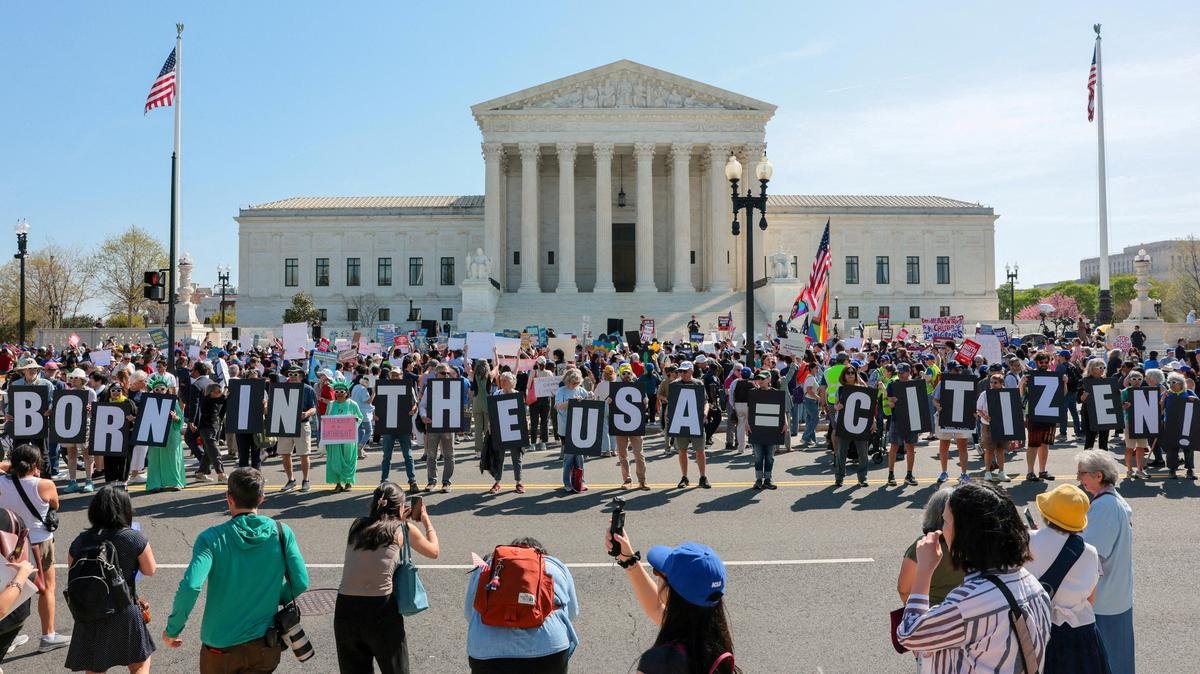
The U.S. Supreme Court has upheld the constitutional principle of birthright citizenship, delivering a significant legal setback to efforts backed by former President Donald Trump to impose limits on the long-standing interpretation of the 14th Amendment.
In a closely watched decision, the court reaffirmed that individuals born on U.S. soil are automatically granted citizenship, regardless of their parents’ immigration status. The ruling reinforces decades of legal precedent rooted in the Citizenship Clause of the Constitution, which states that “all persons born or naturalized in the United States, and subject to the jurisdiction thereof, are citizens of the United States.”
The case stemmed from legal challenges surrounding proposals that sought to reinterpret the scope of the amendment, particularly the phrase “subject to the jurisdiction thereof.” Advocates of restrictions argued that children born to undocumented immigrants should not qualify for automatic citizenship, claiming that such interpretations stretched the original intent of the framers. However, the court rejected this argument, emphasizing that historical precedent and prior rulings have consistently supported a broad application of the clause.
Legal experts note that the decision preserves a foundational aspect of American constitutional law. “This ruling reaffirms what has been settled law for over a century,” said one constitutional scholar, referencing the landmark 1898 case United States v. Wong Kim Ark, which established birthright citizenship as a constitutional guarantee.
Supporters of birthright citizenship hailed the ruling as a victory for civil rights and equal protection under the law. Advocacy groups argued that any rollback could create a class of stateless individuals and undermine core democratic principles. “Citizenship by birth is a cornerstone of inclusion and equality in the United States,” one civil rights organization said in a statement following the verdict.
On the other hand, critics of the policy expressed disappointment, contending that the current system encourages illegal immigration and places strain on public resources. Some lawmakers have indicated they may pursue legislative or constitutional avenues to revisit the issue, though such efforts would face significant legal and political hurdles.
The decision is likely to have far-reaching implications, particularly as immigration remains a central issue in U.S. political discourse. By firmly upholding birthright citizenship, the Supreme Court has effectively closed the door—at least for now—on attempts to narrow one of the Constitution’s most enduring guarantees.
As the debate continues in political circles, the court’s ruling underscores the enduring strength of constitutional interpretation grounded in precedent, signaling that any major shift in citizenship policy would require more than executive action or reinterpretation—it would demand a fundamental constitutional change.