
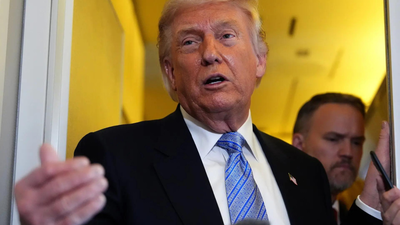
Source TOI
Donald Trump has sparked fresh debate over U.S. foreign policy after questioning the extent of America’s responsibility toward Taiwan, emphasizing the island’s geographical distance from the United States.
Speaking at a recent event, Trump remarked that Taiwan is “9,500 miles away” from the United States, suggesting that such distance should factor into strategic decisions. His comments have reignited discussions about Washington’s long-standing role in ensuring Taiwan’s security amid rising tensions with China.
Trump’s statement reflects a broader “America First” approach that prioritizes domestic concerns and questions the extent of U.S. involvement in overseas conflicts. While he did not explicitly outline a new policy, his remarks implied a more restrained stance compared to traditional bipartisan support for Taiwan.
Taiwan remains a critical geopolitical flashpoint, with China asserting its claim over the island and not ruling out the use of force for reunification. The United States, while not officially recognizing Taiwan as an independent nation, has maintained a policy of providing defensive support under the Taiwan Relations Act.
Political analysts note that Trump’s comments could have significant implications if they translate into policy, potentially altering the balance of power in the Indo-Pacific region. Critics argue that any perceived weakening of U.S. commitment could embolden China, while supporters believe it reflects a realistic reassessment of global priorities.
The remarks come at a time of heightened global tensions, with increasing military activity around Taiwan and growing concerns among U.S. allies in the region. As the debate continues, Trump’s position is likely to remain a focal point in discussions on America’s future role on the world stage.









