Source NDTV
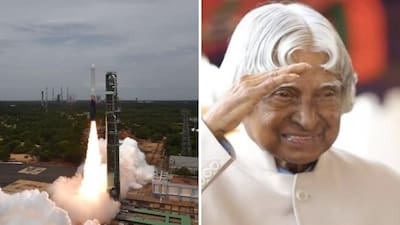
India’s space journey witnessed a symbolic and historic milestone as the Vikram-1 rocket launch aligned with a significant date—July 18—echoing a legacy rooted nearly five decades ago. The coincidence has drawn attention not only for its timing but also for its connection to one of India’s most revered scientists, Dr. A.P.J. Abdul Kalam.
On July 18, 1980, India successfully launched its first satellite, Rohini, aboard the SLV-3 rocket from Sriharikota. This mission marked India’s entry into the elite club of nations capable of launching satellites independently. The project was led by Dr. A.P.J. Abdul Kalam, who later became the President of India and is remembered as the “Missile Man of India.”
Fast forward 46 years to July 18, 2026, the Vikram-1 rocket—developed by private aerospace startup Skyroot Aerospace—marks another leap forward in India’s space capabilities. The launch symbolizes the growing role of private players in the country’s space ecosystem and reflects the vision of self-reliance that Dr. Kalam strongly advocated.
The Vikram-1 rocket is designed to carry small satellites into low Earth orbit and represents a new era of cost-effective and efficient space missions. Named after Dr. Vikram Sarabhai, the father of the Indian space program, the mission bridges the past and the future of India’s space ambitions.
Experts and scientists have highlighted the emotional and historical significance of the date. Many see the Vikram-1 launch as a tribute to Dr. Kalam’s contributions and a continuation of his dream to make India a global leader in space technology.
As India celebrates this remarkable coincidence, the alignment of these two July 18 milestones serves as a reminder of the nation’s steady progress—from its first successful satellite launch to becoming a hub for innovation and private space exploration.
The Vikram-1 launch is not just a technological achievement but also a powerful symbol of continuity, inspiration, and the enduring legacy of Dr. A.P.J. Abdul Kalam in shaping India’s space future.