
Source money control
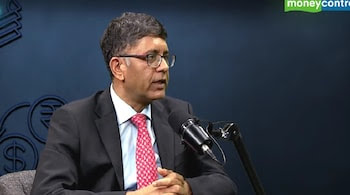
MUMBAI — As the Indian rupee faces persistent pressure amidst global macroeconomic shifts, Anish Tawakley, Co-Chief Investment Officer (Equity) at DSP Mutual Fund, has strongly advocated for the Reserve Bank of India (RBI) to actively deploy its foreign exchange reserves to defend the local currency.
According to Tawakley, protecting the currency from severe volatility is the exact purpose for which India’s massive foreign exchange war chest was built.
Reserves Are Built for Market Turbulence
In recent market commentary, Tawakley emphasized that a central bank’s foreign exchange reserves should not be treated merely as a passive metric of economic strength, but as an active tool during times of market distress.
“RBI should use reserves to defend the rupee; that’s what they were built for,” Tawakley noted, addressing the debate on how aggressively the central bank should intervene in the foreign exchange market.
The comment comes at a crucial time for the Indian economy. While domestic macroeconomic growth remains highly resilient, external pressures—ranging from volatile crude oil prices to shifting global geopolitical dynamics—have consistently tested the local currency’s stability.
Balancing Intervention and Market Realities
The debate over the rupee’s ideal valuation has intensified recently, especially with one-year forward rates showing shifting pressure points. Market analysts note that while allowing a currency to find its natural market level has structural benefits, sharp and unmitigated depreciation can negatively impact import costs, domestic corporate margins, and overall inflation.
Financial data indicates that the RBI’s total balance sheet expanded significantly over the past fiscal year, giving the central bank substantial ammunition. Forex traders report that the central bank frequently steps into the spot and forward markets to shore up the currency and smooth out extreme, volatile swings.
Macro Factor Impact on Rupee RBI Ammunition
Global Crude Pressures Increases import bill, putting structural pressure on INR. High foreign exchange reserves acting as a cushion.
Geopolitical Volatility Triggers risk-off sentiment, causing capital outflows. Targeted market interventions via spot and forward dollar sales.
Domestic Growth Robust GDP outlook and high central bank dividends support sentiment. Strong fiscal breathing space to absorb external shocks.
A Strong Domestic Outlook Despite Global Volatility
Despite the immediate currency headwinds, Tawakley remains structurally optimistic about India’s internal economic engine. He recently highlighted that domestic cyclical sectors remain the safest and most attractive bet for investors, as local consumer demand holds strong and capacity utilization across industries continues to pick up.
By actively deploying reserves to absorb external global shocks, market experts believe the RBI can successfully prevent currency volatility from derailing India’s robust domestic growth story.









