Source NDTV World
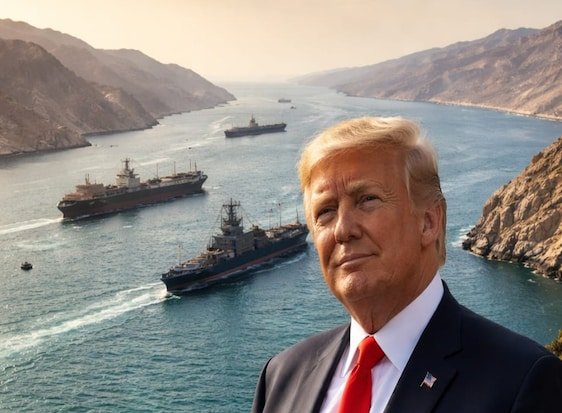
WASHINGTON — In a dramatic escalation of geopolitical tensions in the Middle East, U.S. President Donald Trump announced that the United States is officially reinstating a naval blockade on Iranian ports and will begin charging a massive 20% fee on all commercial cargo transiting the critical Strait of Hormuz.
The sweeping policy shift follows heavy weekend exchanges of missile and drone strikes between U.S. and Iranian forces, which effectively shattered a fragile, month-old interim peace deal.
‘The Guardian of the Strait’
Declaring the U.S. military as the new baseline security force for the region, President Trump outlined the aggressive strategy on social media and in subsequent television interviews.
“The U.S.A. will be, from this point forward, known as ‘THE GUARDIAN OF THE HORMUZ STRAIT,’ but as such, and as a matter of FAIRNESS, will be reimbursed, at the rate of 20 percent on all cargo shipped, for any and all costs necessary to do the job of providing safety and security to this very volatile section of the World,” Trump stated on Truth Social, adding that implementation would begin immediately.
Speaking later on Fox News, Trump expressed deep frustration over collapsed negotiations, claiming Tehran walked away from a “done deal” at the eleventh hour. “They’re back at their business trying to take over the Strait,” Trump said. “We’re taking over the Strait. They have nothing… We guarded it for nothing, and now we’re going to guard it, and we’re going to get paid for guarding it”.
Target: Iranian Logistics
According to U.S. Central Command (CENTCOM), the naval blockade is scheduled to take effect at 4:00 p.m. Eastern Time. Military officials emphasized that the operation specifically targets Iranian maritime commerce.
Trump clarified that the blockade is “so named because it is only stopping Iran’s ships or customers from entering or leaving,” promising that all other nations would retain “fair and open use of the Strait”. The move completely strips away the primary maritime concessions Washington granted Tehran during brief ceasefire talks earlier this year.
Global Markets Rattled
The announcement immediately sent shockwaves through global energy markets, driving crude oil prices sharply higher. The Strait of Hormuz is the world’s most vital oil chokepoint, historically carrying roughly a fifth of the global oil supply.
Industry analysts and shipping operators expressed immediate bewilderment over how the 20% fee would be collected—and whether it applies to the total value of the cargo or strictly to operational shipping costs. At current market rates, a 20% levy on the value of a fully laden supertanker could amount to an unprecedented $32 million per transit.
MetricImpact / Status
Target WaterwayStrait of Hormuz (Critical global energy chokepoint)
Proposed U.S. Levy20% fee on all eligible transiting cargo
Blockade ScopeRestricts all Iranian-owned or customer vessels
Market ReactionImmediate surge in crude oil prices
International Pushback
The unilateral declaration has already drawn sharp criticism and pushback from international bodies. The United Nations’ International Maritime Organization (IMO) issued a prompt statement reiterating its long-standing opposition to maritime transit tolls, noting there is “no legal basis through which to introduce mandatory tolls simply to transit through a strait used for international navigation”.
Meanwhile, Iranian Foreign Minister Abbas Araghchi responded with a tongue-in-cheek post on social media, mocking Trump’s rhetoric. Araghchi wrote that while whoever provides safe passage should be compensated, “Iran has always been the GUARDIAN of the Strait and will remain so FOREVER,” adding that “20% is of course too much. We will be fair”.
As CENTCOM forces prepare to enforce the new perimeter, maritime insurers are bracing for heightened volatility, warning that the heavy U.S. military presence and aggressive financial penalties are likely to invite further asymmetrical retaliation from Tehran.