Source TOI
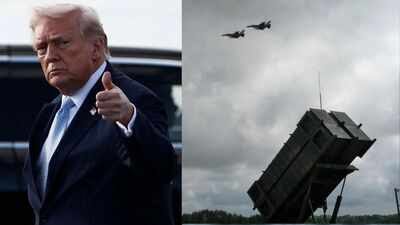
WASHINGTON — President Donald Trump has forcefully dismissed mounting concerns that U.S. military stockpiles are reaching dangerously low levels amid ongoing regional conflict and air defense operations in the Middle East.
Addressing recent media reports detailing internal Pentagon warnings, the President pushed back against claims that critical inventory shortages—particularly regarding specialized air defense interceptors—are placing limits on American military readiness or strategic choices.
“We have far more munitions than anyone in the world, and far more than we need,” Trump said in a statement to The Wall Street Journal.
Rising Tensions and Internal Pentagon Warnings
The President’s comments follow internal administration discussions highlighted in recent reports by The New York Times and The Wall Street Journal. Senior military officials, including Joint Chiefs of Staff Chairman Gen. Dan Caine, reportedly briefed White House leadership on the rapid expenditure rates of high-end surface-to-air systems, including Patriot and THAAD (Terminal High Altitude Area Defense) missile interceptors.
According to officials familiar with the briefings, defense leaders voiced concerns that expanding air strikes or maintaining high-intensity defensive operations could dangerously deplete critical reserves. That strain was underscored after a recent ballistic missile strike in Jordan penetrated defense shields, killing three U.S. service members and highlighting the sheer volume of incoming threats American and allied forces face.
Independent defense analysts at the Center for Strategic and International Studies (CSIS) have echoed these supply warnings. CSIS researchers Mark Cancian and Chris Park estimated that at least 1,500 Patriot interceptors have been expended since major regional engagements began, leaving an estimated total inventory of fewer than 1,000 units remaining. Experts caution that such heavy depletion creates near-term operational risk and could hinder deterrence capabilities against peer competitors in other critical global theaters.
Administration Maintains Full Readiness
Despite these warnings, military commanders and administration representatives insist that American defense posture remains robust. Officials cited by The Wall Street Journal noted that U.S. Central Command Chief Adm. Brad Cooper believes operational commanders retain full capability to manage constrained interceptor inventories. Central Command’s strategy emphasizes aggressive, proactive strikes to destroy threat launchers on the ground before large-scale salvos can be fired.
At the same time, top executive spokespersons backed the President’s public stance. White House Press Secretary Karoline Leavitt and Pentagon chief spokesman Sean Parnell both affirmed that the armed forces possess all the necessary resources and operational capacity to execute any mission ordered by the Commander-in-Chief.
While White House officials declined to publicly release exact expenditure figures citing national security protocols, they emphasized that U.S. military supply chains, global prepositioned stockpiles, and industrial production capacities continue to ensure that American firepower remains undisputed.